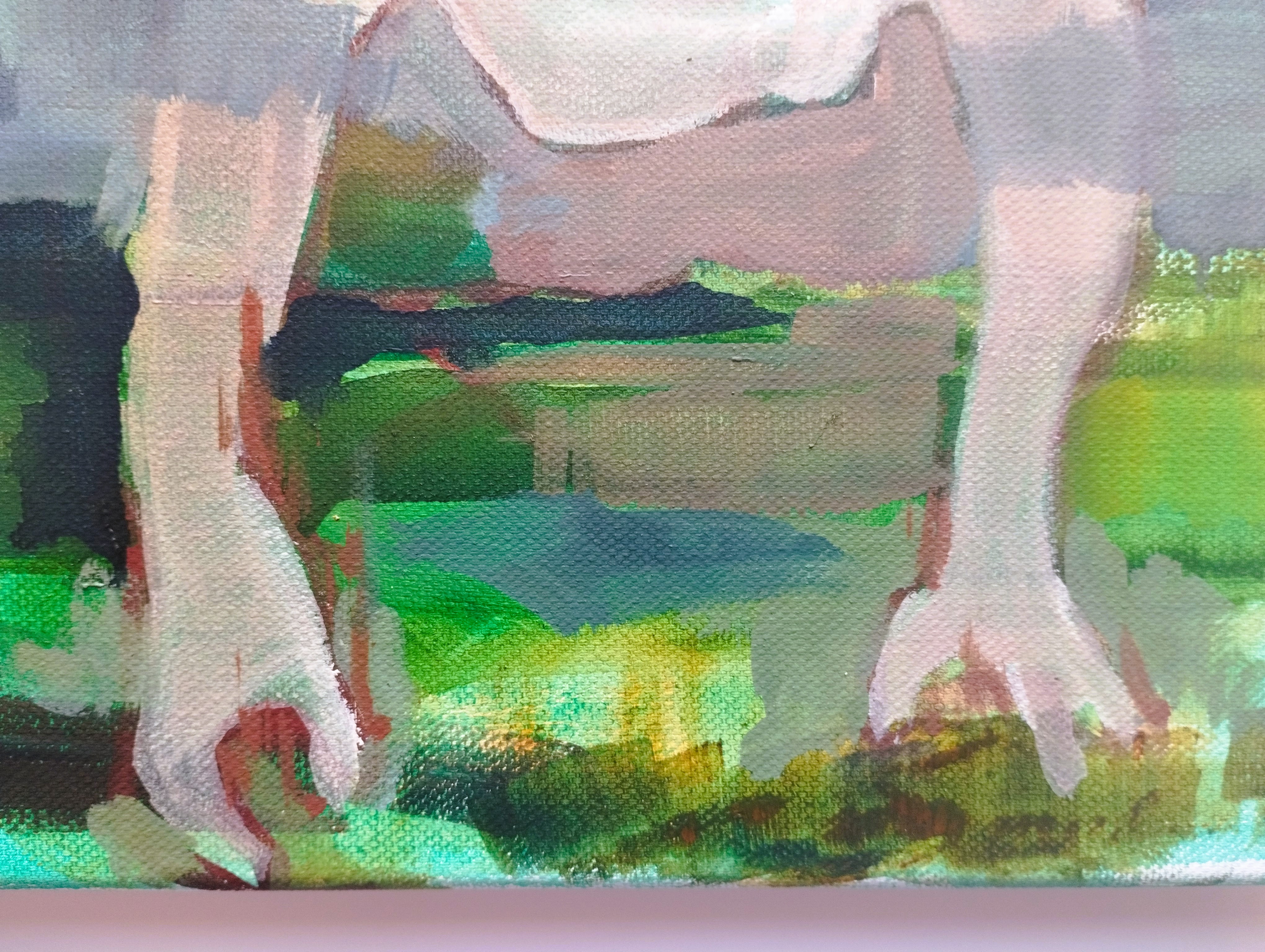
If you choose a group of photographs that have this feeling of ‘punctum’ then I think the only way to prevent the paintings becoming illustrations of the photographs is to remove them from view. Then it becomes almost like a memory game. What forms will remain impressed on your memory and make their way into the painting? Remember, this will involve sitting with the photographs for some time and looking.
Maybe you should set some limitations?
Choose flat brushes to work with: you know, large brushes can be difficult on a small canvas.
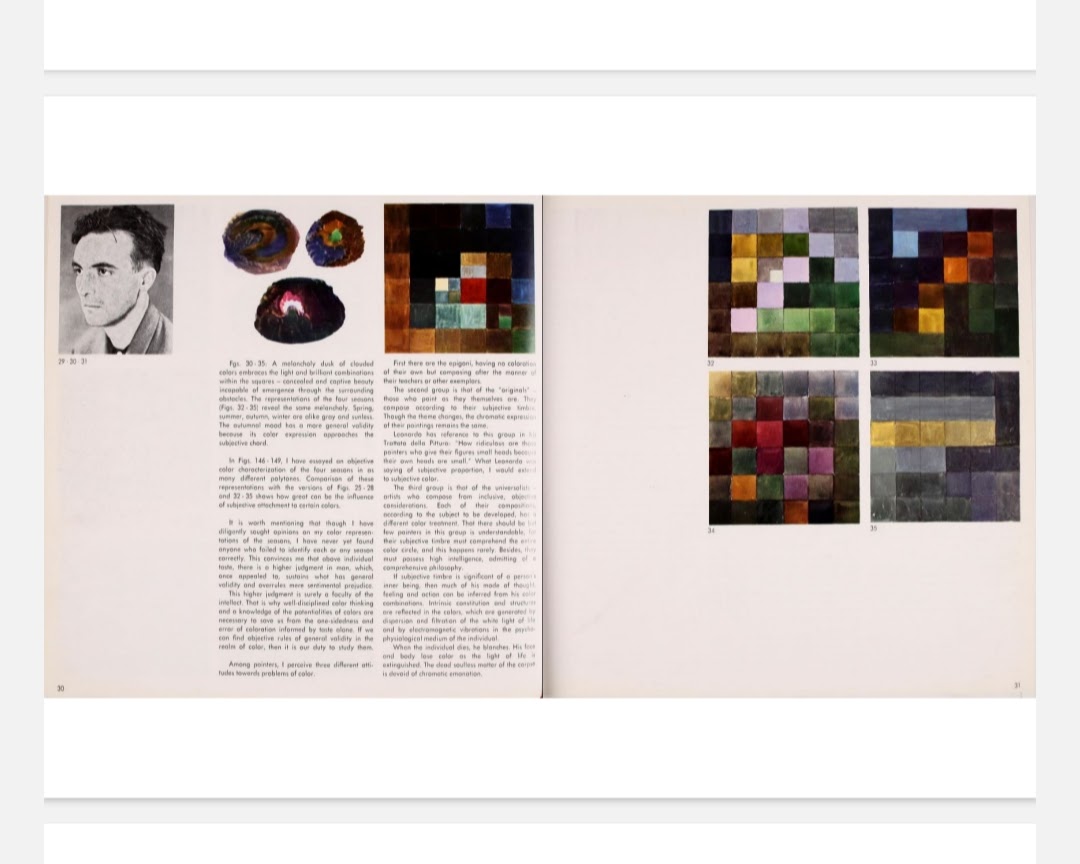
Itten’s ‘melancholy’ palette.
What would it be like to paint in semidarkness?
An enquiry into photographs and their relationship to memory through paint…. Perhaps that is not what this is? Maybe it’s just subterfuge in order to paint, a way in?
Notes: –
‘We don’t have memories, we are memories; or at least we are duration and memory is a function of duration.’ (Watson, 1998: quoted from Zhang, R. 2020)
Maria Lassnig acknowledged Francis Bacon as a genius but felt annoyed by comparisons, finding him a “king” or “emperor,” yet not a kindred spirit, primarily because he painted from photographs.
‘Both the ‘virtual’ and the ‘actual’ are as real and solid and material as one another. The latter is effectively a subset of the former; a subtraction from the total, the total which Deleuze sometimes refers to as ‘the Absolute.’ The world as ‘actualised’ in consciousness is that aspect of the world which is of enough interest to the organism for it to connect its sensory-motor circuits in such a way that a consciousness is actualised.’ (Watson, 1998: quoted from Zhang, R. 2020)
‘The dead are not dead. They do not truly die until the day that the last person to have known them dies. As long as we have something to say about ghosts, as long as memories inhabit us, even silently, even buried in the bottomless abysses of our minds, those ghosts will continue to coexist with the living.’ (Leopold Sedar Senghor: Slimani, L. 2021)
 NIKKI FOSTER
Leave a comment