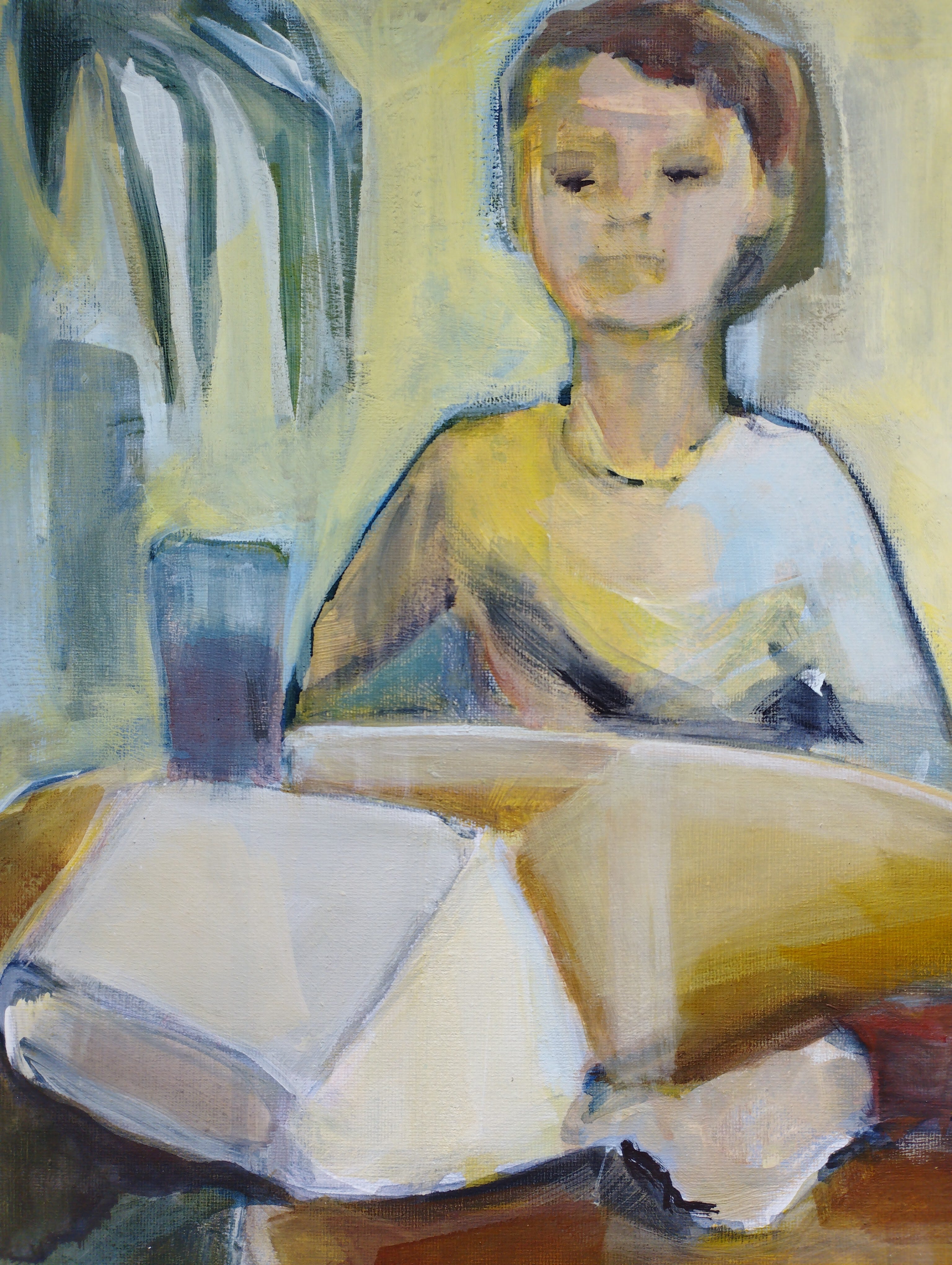
I have been looking recently at the work of Alex Katz and Wilhelm Sasnal. What they appear to have in common is their use of film stills, photographic imagery, and an interest in the influence of illustration and advertising. Music is also present in both conversations. I draw these comparisons from listening to both of their episodes on the ‘A Brush With…’ podcast, but I would also argue that they each harness what Alex Katz describes as ‘muscular painting.’
I briefly encountered Alex Katz in person in my mid-twenties. I was working as a gallery attendant at the time at the National Portrait Gallery in London. Katz had a temporary display of paintings on the ground floor in rooms 41 and 41A in the summer of 2010. I stood in my uniform in the corner of one of these rooms on duty. There had been whispers of him visiting the gallery all day, a ripple of excitement, as there always was when a major artist or celebrity was in the building. I say ‘major artist’ because the front of house staff were basically 50 per cent artists themselves. I paced around. Days were generally long and tedious, but I liked new displays and being immersed in them for long periods, at least at the beginning of a show, was not so bad. The room was closed to the public and completely empty, so I was most likely positioned there for insurance reasons. Then in he walked, tall, lean, tanned, bold, and in my eyes quite old, a complete painting legend.
‘Hello,’ I said after a few moments.
He glanced at me, only then realising I was there, and looked mildly irritated. He did not respond and instead paced the room, occasionally getting up close to his paintings. He seemed agitated. I watched him in silence. I did not feel awkward. I sensed he wanted to be alone with his paintings, but it was my job to stand there, and I did so unapologetically. The curator of twentieth century painting, Paul Moorhouse, came in and they shook hands. I always liked Paul Moorhouse. He was quietly friendly and curated some great shows, including Frank Auerbach. He did not seem aloof like some of the other curators. They talked quietly, and then another assistant walked in as we changed position in our twenty-minute rotation.
When I later listened to the ‘A Brush With…’ episode, those brief moments alone with him lingered in my mind. He had a formidable presence, an intensity. When he speaks to the presenter, his knowledge is sure-footed and grounded in experience, and he has a good sense of humour. I have often wondered what it would be like to be a man of that stature, with a presence that takes up space. Nonetheless, in the gallery he did not seem at ease, at least that was my impression. Perhaps even legendary artists are never fully at ease.
In the podcast he talks about what he terms ‘muscular painting.’ For the last couple of weeks I have been thinking about this turn of phrase. From what I can see through online research, it is not one that is especially used in reference to a painting style or technique. I find it quite an aspirational term, and that is not just because I am puny. It denotes something decisive and physical about the act of painting, something bodily and intentional. Stronger than gestural. Katz also refers to painting as being part of his muscle memory after having done it for so long, like riding a bike.
When recently reading an article by Slow Looking on Substack, he refers to Robert Ryman’s experience as a gallery attendant and how beneficial he found it later as an artist. I have to agree. Of all the jobs I have had, my work as a gallery assistant changed my perspective. You are alone for long periods with artworks. To get out of your own head, you have no choice but to immerse yourself in their making, trying to deconstruct their different elements. An interesting facet of this role at a large gallery is that you see the inner workings and the structure of the organisation. Because you are essentially at the bottom, you are invisible and able to observe everything without any of the responsibility or decent pay. I spent hours with portraits by John Singer Sargent, Augustus John, Gwen John, Laura Knight, L S Lowry, Vanessa Bell, and a huge cartoon by Holbein of King Henry VIII. These personal favourites are imprinted on my memory. Whether they have improved my painting I do not know, but they have certainly improved my way of seeing and thinking.
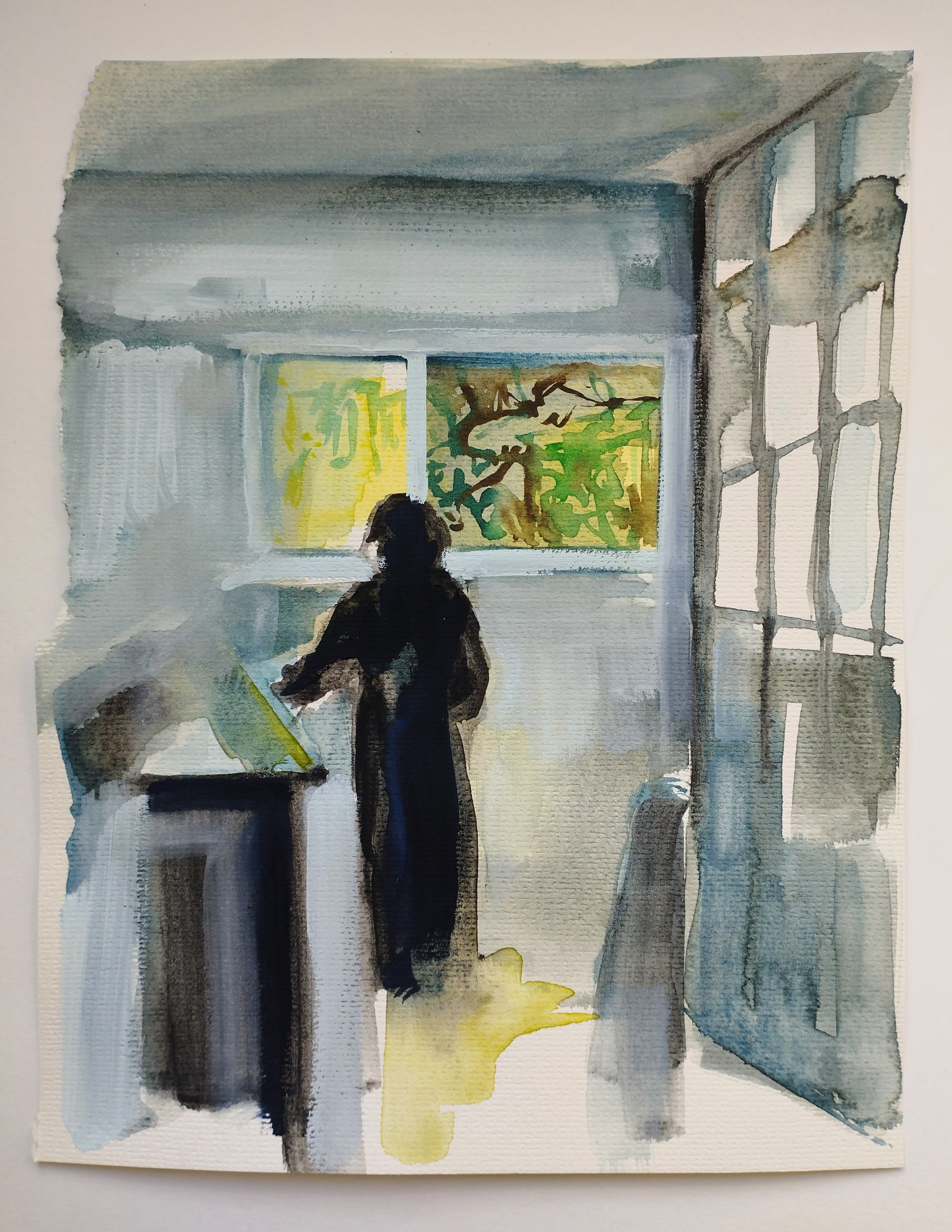
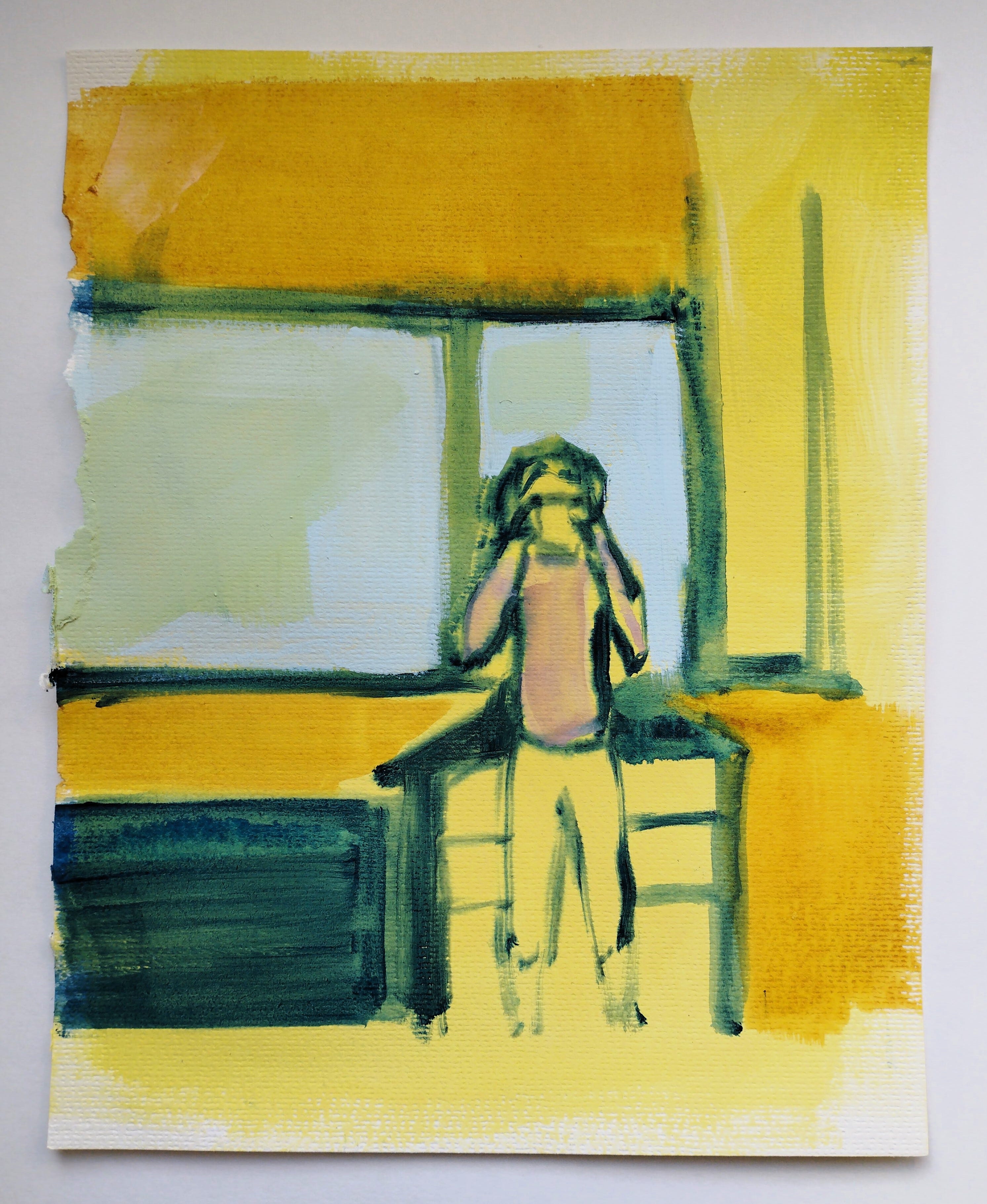
I am still thinking about the idea of ‘muscular’ painting, trying to locate its actuality through words and language. The images attached to this article are examples of my attempts, on paper and canvas, to lay down these thoughts in practice. Below I will summarise some of my notes from the podcast. I would, however, recommend giving it a listen (link here), as I found Katz to be entertaining, engaging, and refreshingly unpretentious. Our face to face encounter was just a blink of an eye in the lives of a gallery attendant and a major artist.
What “muscular painting” means: a way of painting that emphasises strength, clarity, and physical confidence rather than delicacy. Bold, decisive execution. Physical presence over emotion. Flatness with force. A stance against Abstract Expressionist angst and overly emotional brushwork. Scale matters.
‘Painting blasts’ in sketches. Cropping. Art should represent the energy of the now.
 NIKKI FOSTER
Leave a comment