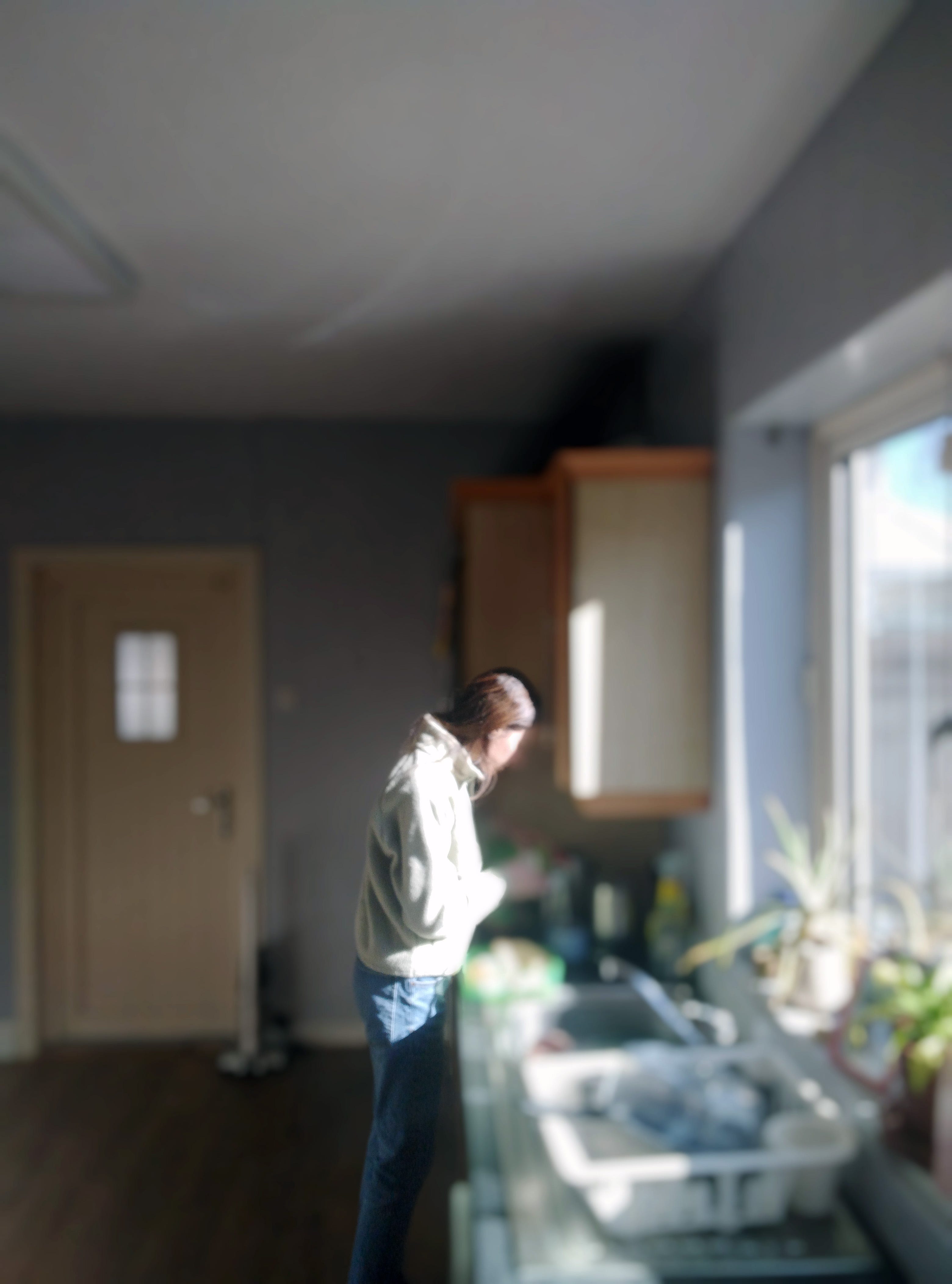
I would like to clarify the remark I made in With Love from the Suburbs about our house being eerie, to place it somehow, somewhere. What are the truths in this claim, if any? I could ask my kids. When they have to fetch something from an empty or unlit room, they dash there noisily, turning on every light as they go. If my teenage daughter is home alone, she will turn on every light in the house, so when I return it is lit up like a Christmas tree. But I am guilty too. When they all went away recently and I slept in the house by myself, I kept the lights on.
When we first bid on our home, there was only one other bidder. We couldn’t believe our luck. We knew it was partly down to the faded décor, old, stained carpets and peeling wallpaper. But the house was structurally sound. Since moving, we have changed what we can, with new carpets and floors; some rooms have been painted while the others wait. We even gutted the garage to make a bright room where we eat, with a small home office in the corner. Alterations are made in drips and drabs.
Maybe it is the lack of our mark in parts of the house which stirs this feeling. There exists a blurring of past and present; you see remnants of who was here before. Echoes of their taste and murmurs of their home life. Let me illustrate a few, not all, but the most keenly felt.
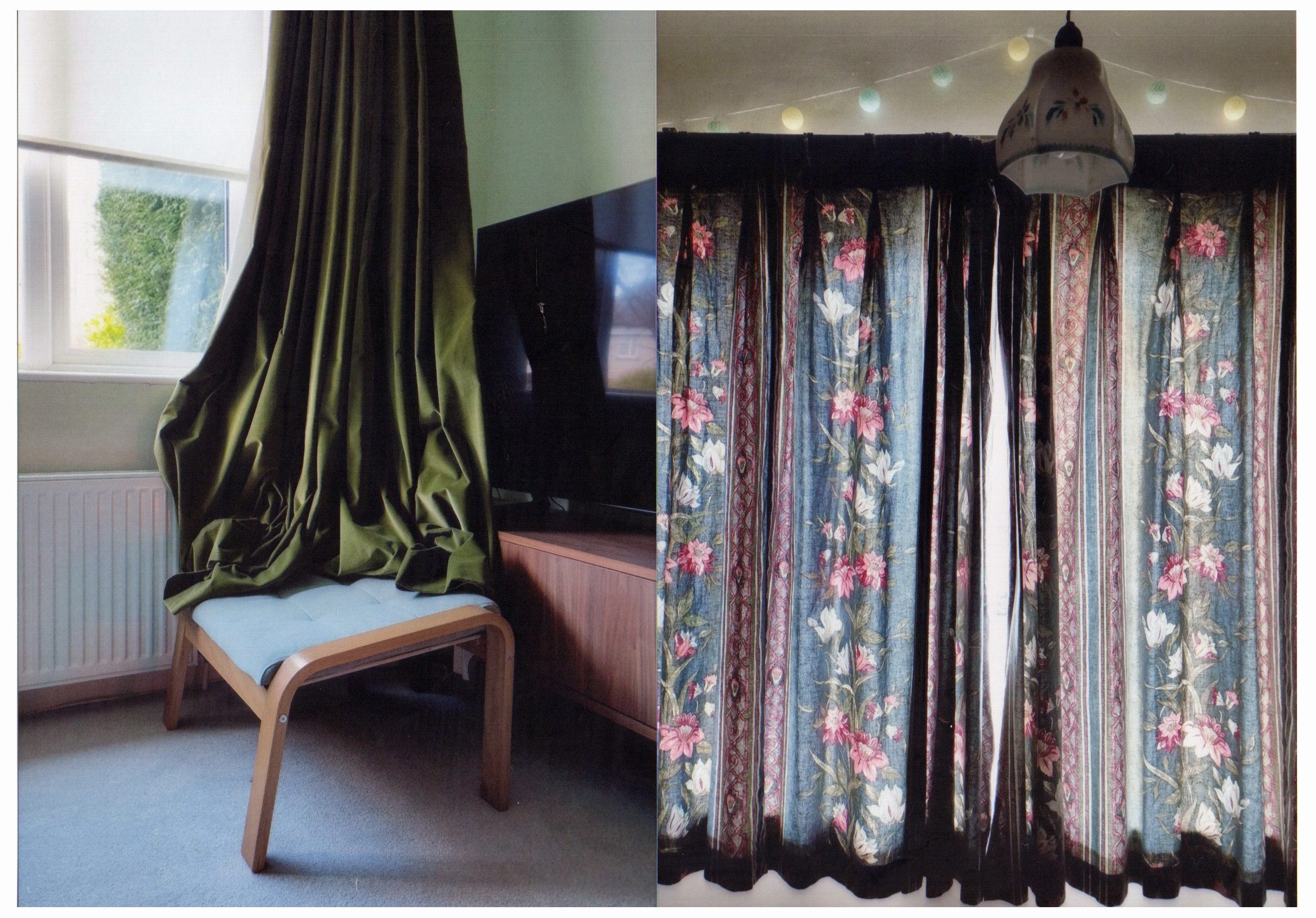
I am not a big fan of curtains; to me a decent blind will suffice. My husband has insisted we keep some of the original curtains for practicality; the house is cold in winter. In the one room where I insisted they go, the walls are pockmarked by the old curtain rail. Heavy green ones hang in the sitting room, blue florals in the boys’ room, and embossed cream ones in our bedroom. It is the latter which bothers me the most, because of the stain on the right-hand side, near the bottom, which looks like blood. In the creases it is barely visible, but when I draw the curtains, it catches my eye. “Maybe it’s something else,” I say. “No, it’s definitely blood,” my husband says.
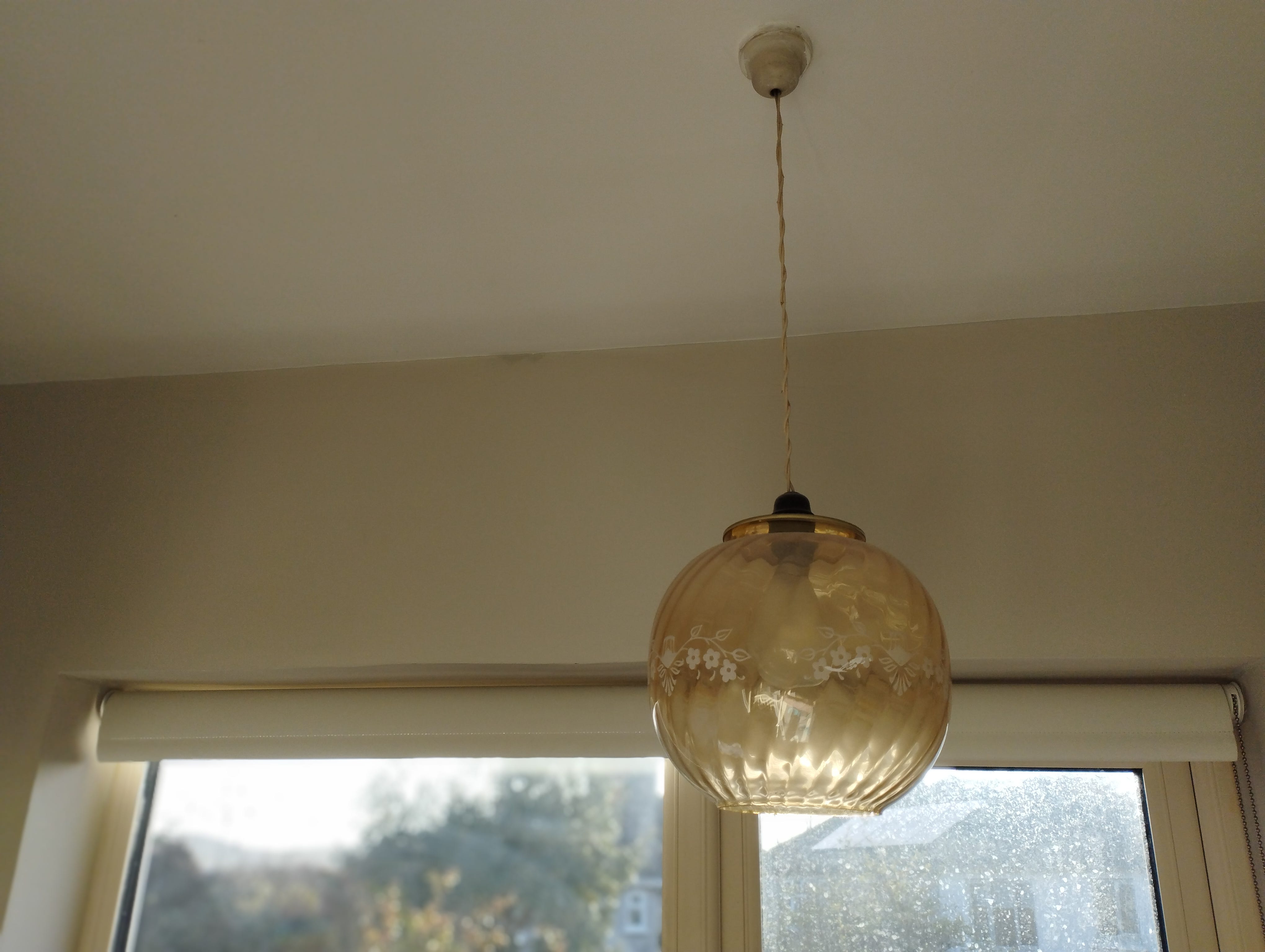
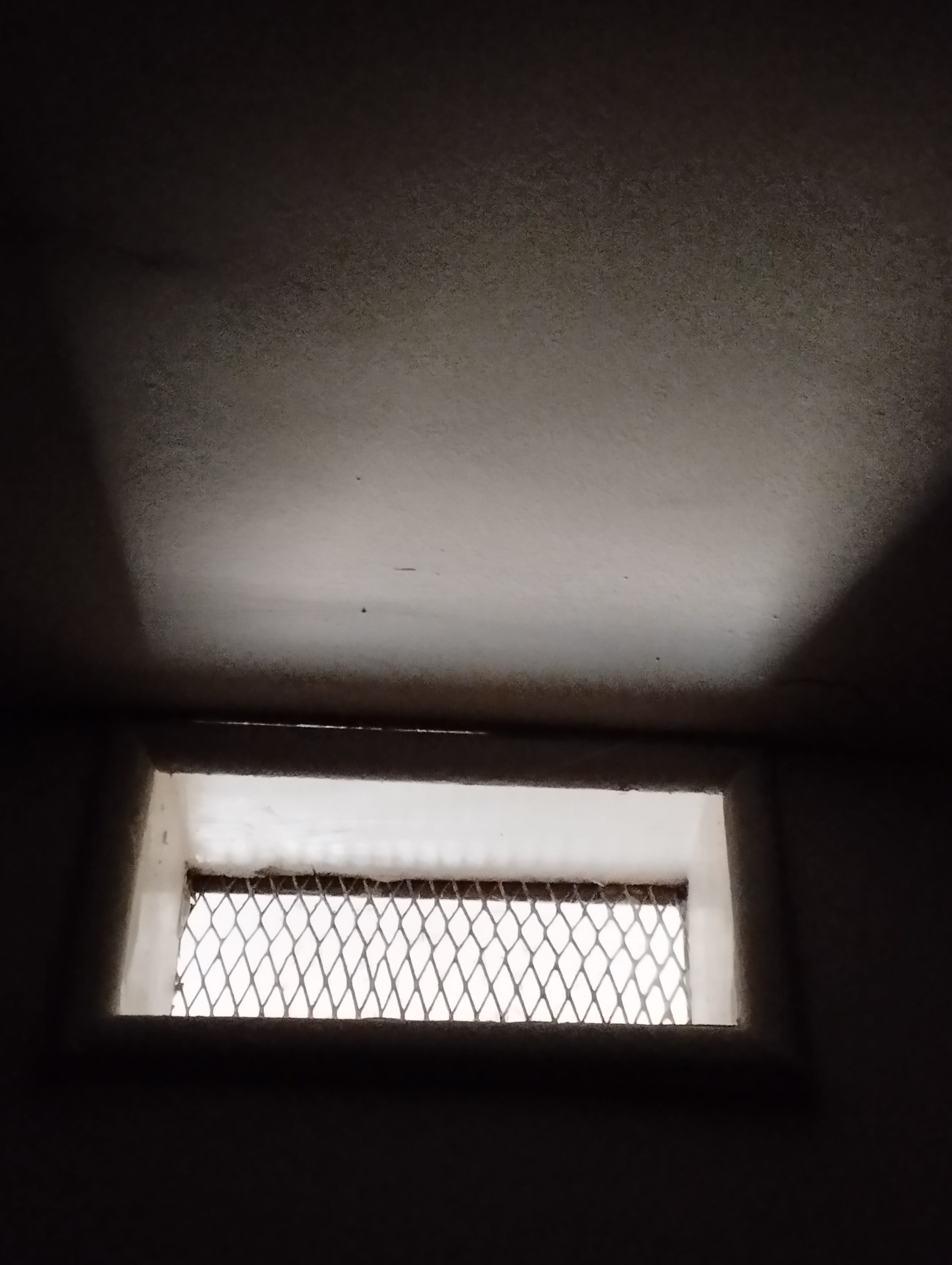
My daughter gets most frustrated by these remaining signs of the elderly residents before us. “Why do I have to look at this grannyish lampshade every day?” She resents the metal grates above her door, and I promise to remove them when we have the money. They sit, covered in rust and dust, above not only hers but all the bedroom doors. Originally installed for ventilation, they circulate not only air but childish whispers and adult snores.
One afternoon, in annoyance, my daughter pulled the old plastic towel rail from the back of her plywood door, leaving holes and dents which make her growing volatility evident. I have bought wood filler and white paint to cover the damage, but these DIY balms sit under the sink, and the task remains on my to do list. But I empathise with her, as I lie in bed staring up at the round LED plastic dome above me, affixed to the ceiling. How long till we change it? I turn on my side; we have been here for two and a half years now.
I want to say I am grateful for this house, and I am. People say there is no rush; you have a lifetime. Just like they ask, is this your forever home? And forever sits with me uneasily. I am brought back to my husband’s phrase when we landed, “you will have to carry me out of this house.” We have moved so much in the last ten years, slept on so many mattresses, signed several rental leases, I think I am still partly in transit. You grow accustomed to borrowing space, bending to a house rather than it bending to you. Have you ever tried to listen to what a house wants? Is it just inanimate bricks and mortar? When we sit in the lounge, watching television, the door clicks open as if the room wants to breathe, to escape the noise.
The final nod, that I will mention here at least, to the house’s past life presents itself in the form of an old copybook. The book was found in one of the upstairs cupboards. It is A4 in size and, on the front, it has a label for Our Lady of Mercy Training College, Carysfort Park, Blackrock. After checking online, it confirms what I suspected from the contents, that this was a training college for women aspiring to become primary school teachers. It closed in 1988. The first page is dated 1948 to 1950, and there is a picture of Jesus collaged alongside a quote from the Bible. The handwriting inside is very elegant, slightly slanted, and relates mainly to Irish, with some Latin and English. Some pages have been delicately illustrated or collaged, with lift-the-flap style annotations. Whatever brief passages there are in English I try to decipher, but the cursive style makes me a slow and clumsy reader.
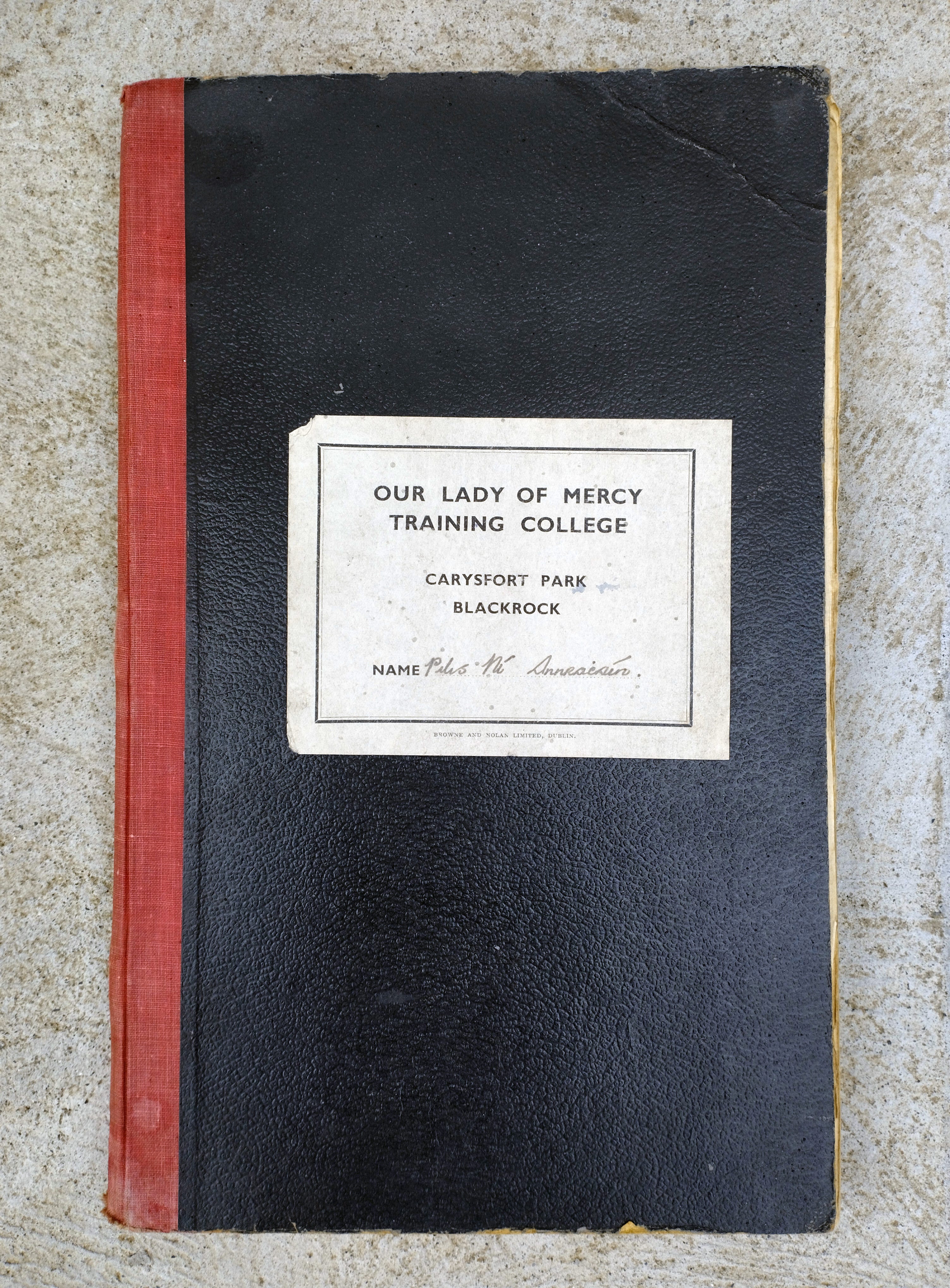
Does the book still belong here? If I had a forwarding address, I would send it there. Perhaps it should be in a museum, where it could be cared for properly? But would it be consigned to a life in storage, never to be seen again? I feel like its custodian, wearily responsible for its legacy. And I am superstitious, an irrational part of me is reluctant to remove it from here, its home, in case it brings bad luck.
My friend says that whenever the house is getting on top of her, she leaves, closing the door on the chaos. I decide to do the same. And who knows how long we will live with these original features. Is it my forever house? The question lingers and repeats like the Outkast song, Forever, forever ever? Forever ever? For now, I bend to its fixtures and folds.
I took a piece of living clay, and gently formed it day by day, and moulded with my power and art, a young child’s soft and tender heart. (from the copybook, p.2)


Leave a comment