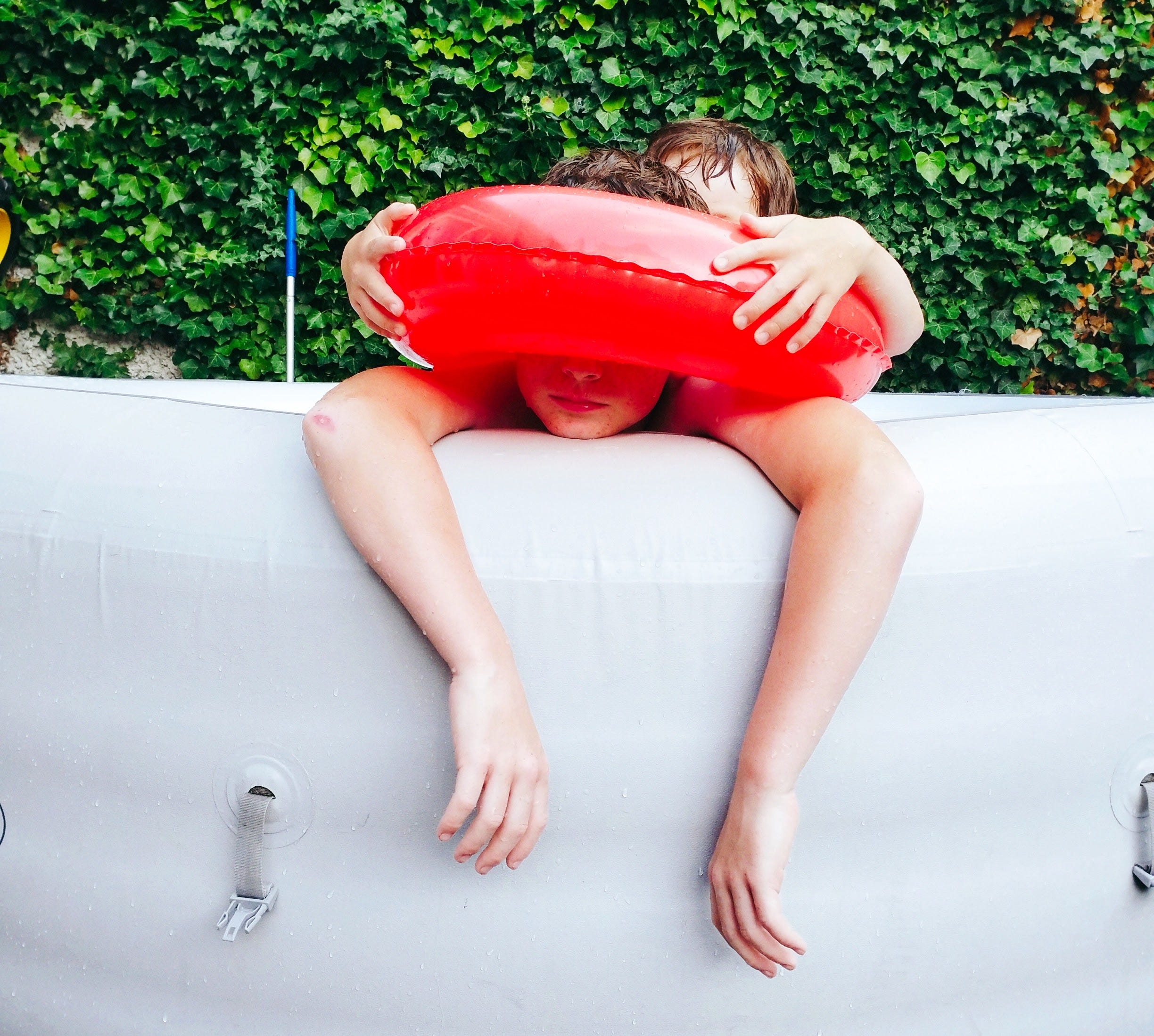
It’s summer, a hot summer. Every day we head out in shorts and t-shirts. The grass turns yellow. Our skin freckles and darkens, and we compare arms.
Most days are busy and I have little time. I write a few words in my journal, what we did, if we tried anything new, any strange dreams. Last night I dreamt I was in a pharmacy, taking a long time to choose what I wanted. I ended up buying a brown leather shoulder bag and placing the boxes of items I’d also brought inside it in a neat formation, like Tetris. I thank the cashier but I’m not sure I got what I wanted.
I’m working on a painting of my youngest. His big eyes stare out from it wide and accusing. Do you see me? I know you are there, but do you see me? Recently I’ve felt an urge to paint figures and faces looking out, confronting the viewer. Perhaps because I’ve avoided taking photographs that show my children’s eyes or full faces, to protect their privacy. For reference I turn to old favourites: Munch and Piero Della Francesca.
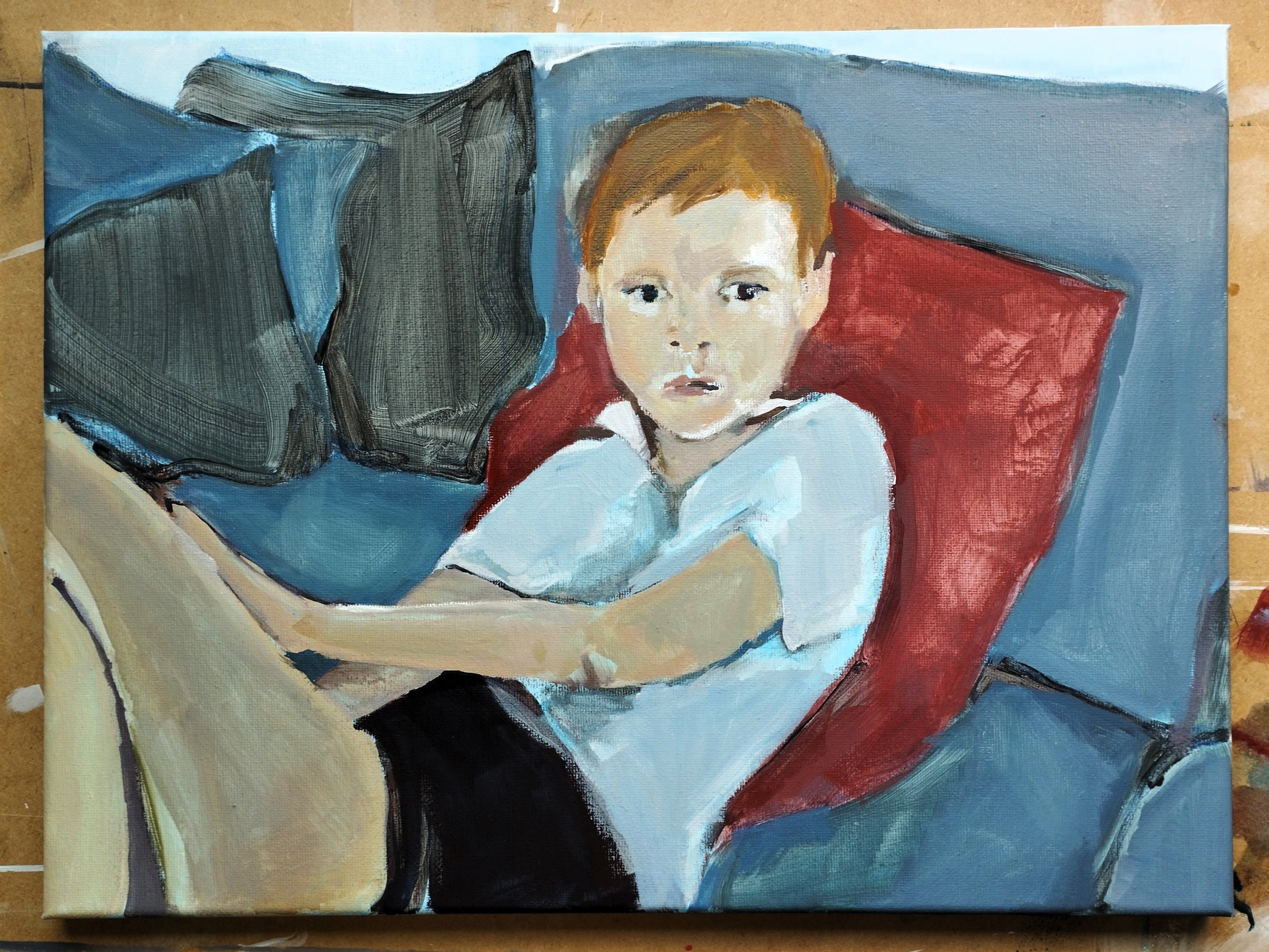
And Michaël Borremans. When I saw images online of his latest exhibition at David Zwirner I was in awe. The unsettling beauty of these paintings, and their stillness. Looking at Boy with Bloody Arms, who sits ruddy-faced, slightly weighty and strangely glossy, with sweat? Or newness, like fresh meat. I wonder: is he a nice boy? His bloody arms would suggest otherwise. This assessment seems overly simple, but day-to-day now when I meet boys circling around my sons at skateparks and playgrounds, I make judgement calls quickly.
The boy in the painting reminds me of a similar looking youth I encountered on the street recently. My 11-year-old was cycling ahead; my youngest and I were behind. The boy turned his head, eyed my son on his bike, and spat towards his legs. The spit hit the body of the bike. My son stopped, looked disgusted, and upset. Intimidated, he says nothing. He loves his bike.
I am fuming. I go after this boy.
‘Excuse me. Did you just spit on my son’s bike?’
He turns, looks me up and down.
‘No,’ he says.
‘I was just walking right behind. I saw you,’ I say.
No response.
‘Would you like me to spit on your bike?’ I ask.
‘I don’t have a bike,’ he says, smirking.
‘Well, what about your backpack there? Will I spit on your backpack?’
He looks at me, squinting.
‘No,’ he says.
‘Well, don’t do it to other people then,’ I say.
I turn on my heel and walk away, muttering under my breath, still mad as hell. The boy’s eyes follow me, bemused, as though I am some new mutant breed of Karen he hasn’t seen on YouTube. One willing to spit on his backpack.
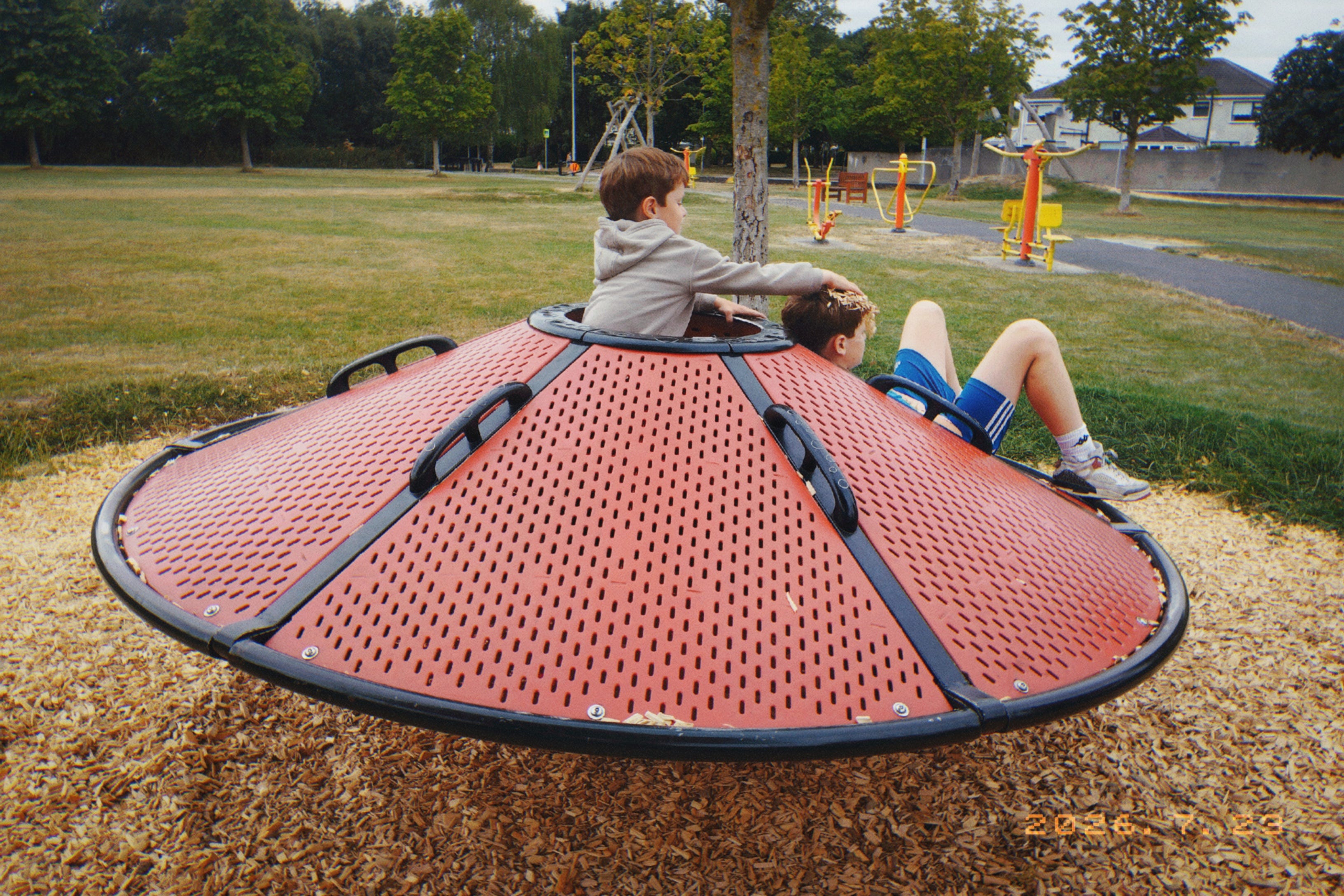
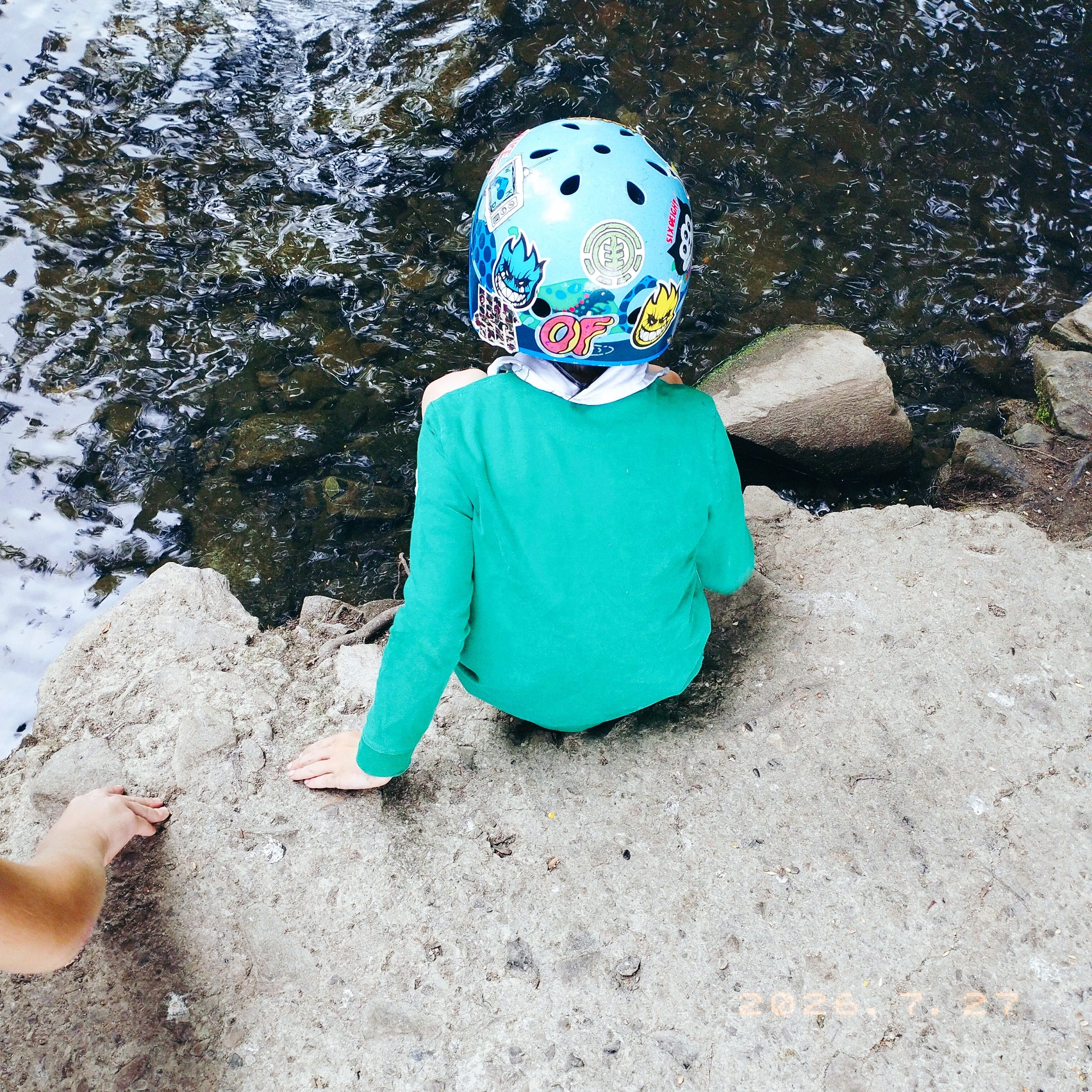
I take photographs every day, also as a kind of journal, but I’ve started to focus on cropped gestures and large forms, so there is thought in them too. I’m looking to see if one colour or form can dominate. Something simple, vibrating.
I keep circling back to an interview with director Richard Linklater about his film, Boyhood (2014). In it he relates how he wanted to say something about childhood. He wanted to capture moments, not big events. Moments you remember despite their everydayness. The boy he cast as the main character was 6 when they began the project. The same age as my youngest son. They filmed a piece of the film every year for 12 years, until the boy became a young man of 18.
Fragments of moments building up, chronicling a path through childhood, towards adulthood.
I wonder if a project of this kind could work through painting and photography. Featuring my own son but, as Linklater acknowledges, it would also become a study of parenthood: how we muddle through. What would a long-form project of this kind look like for us, over 12 years. In truth, I have already started this habit of distantly observing my kids’ childhoods. Letting their experiences morph into paintings and photographs. But when you name a project, does it lose its mystery? Or will it add weight, an air of authority?
I have started looking for a new job now my recent studies have finished. The landscape is quite barren for an arts graduate. Of course, this is the reality. Yesterday we cycled 11 km to UCD. We heard it was a great place for skateboarders. It being a Saturday, the campus was empty. I’d never been there before, and I couldn’t help marvelling at the brutalist architecture. My son did bunny hops and bolted down steps on his bike, but I took my time, cycling around the concrete squares. Questioning.
If I could go back, would I study painting? Would I allow my 19-year-old self to sign off on a student loan for a subject that doesn’t pay? Well, perhaps for some, but not for most. I would love to say yes…
We take a break on a grassy verge. The boys have some water. A middle-aged man in jogging gear comes strolling over to us. In a very reasonable tone, he says: ‘have some consideration, do you see any other bikes here?’
I shake my head. I gesture to the space around us: grass and footpath. But this must be his strip. I laugh at his ridiculous sense of entitlement. My education may have been abstract, without a clear sense of direction, but at least it has encouraged me to pause and question. I look at my sons’ faces as they stare at this red-faced man in confusion. Imagine, once he was a boy, just like them. I begin to think seriously about this task of observing boyhood, and what it could be.
We get home and I play Blind Melon’s “No Rain” in the kitchen. The melody is upbeat while the lyrics describe something else, a different feeling. My son comes in and asks about the music. I tell him about the band.
‘You mean it’s a boy singing? I thought it was a girl!’ he says.
The next day it rains.


Leave a Reply