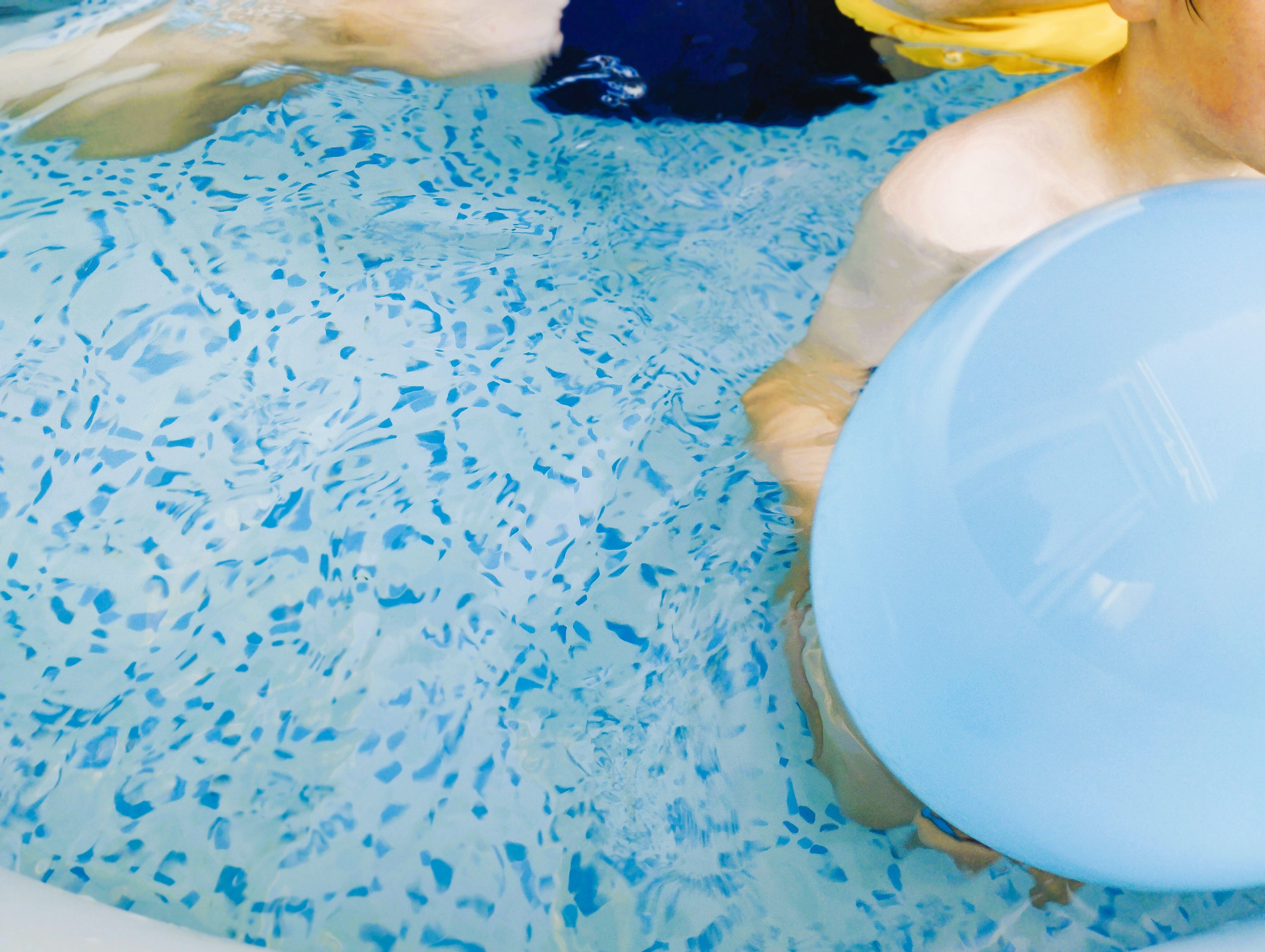
My sister rang me this evening, and we chatted about everyday things. On the video call, she is walking along a promenade in Faro.
“How is your artwork going, Nik?”
A surprise question, which catches me off guard.
“Um, good, I think. I’ve just finished two large paintings.”
“Oh yeah? What are they about?”
“Oh,” I laugh. “So you want the blurb?”
“Yes,” she laughs back. “Give it to me.”
And I pause. In my head I ask: do I give her the public version or the private version? I give her the public version. Not because I am secretive or withdrawn, but because she is too close to the centre of gravity.
“Philosophy is really homesickness. It is the urge to be at home everywhere.” (Novalis, quoted by John Berger.)
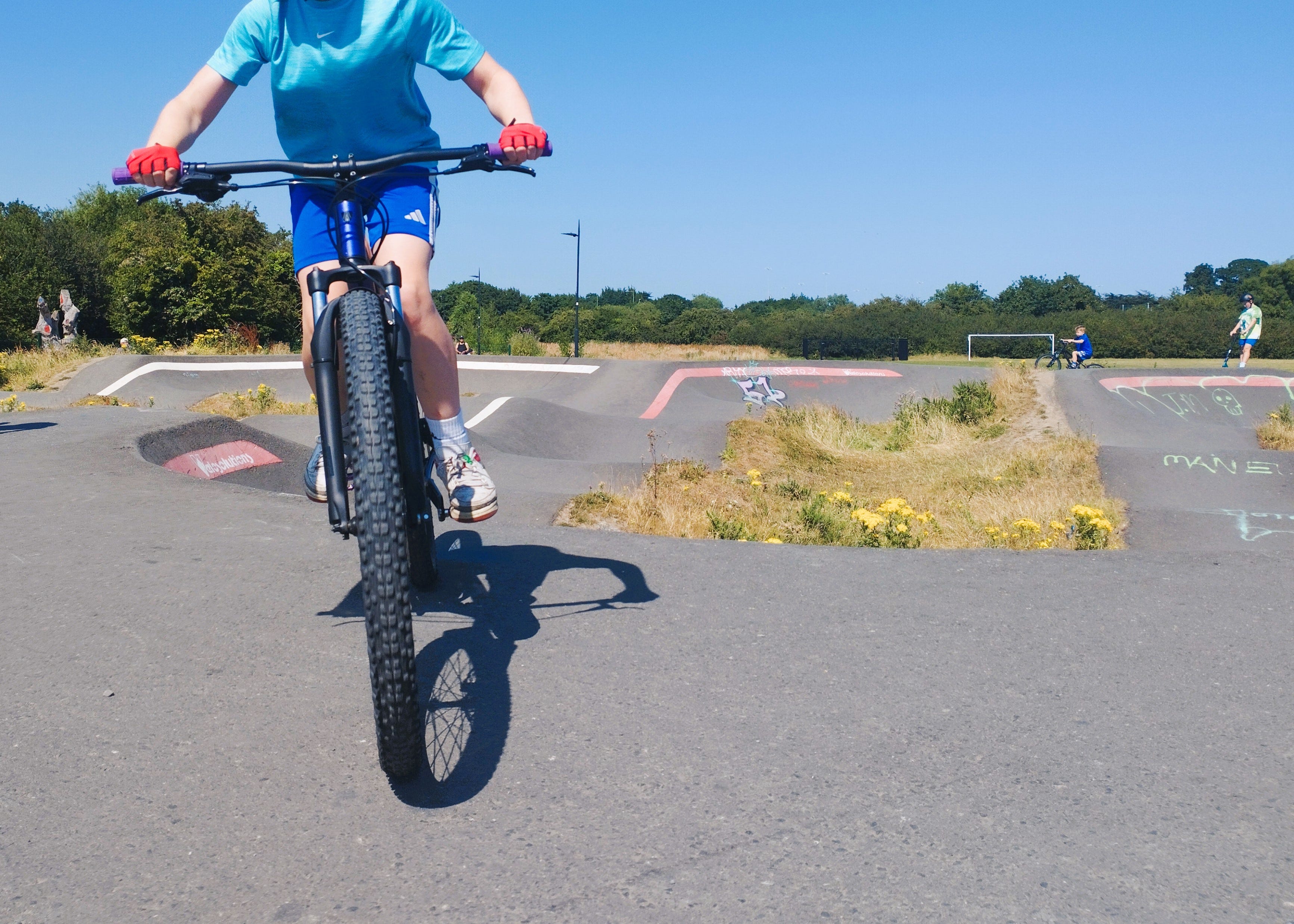
It was hot today. Everything was still: roads and footpaths empty. There is always a feeling of FOMO in this weather, like everyone who is not working is at the beach. Perhaps this comes from being from a seaside town. Because I don’t drive, my kids must make do with wherever we can cycle. Today we roasted at the pump track, with waves of heat rising from the cement.
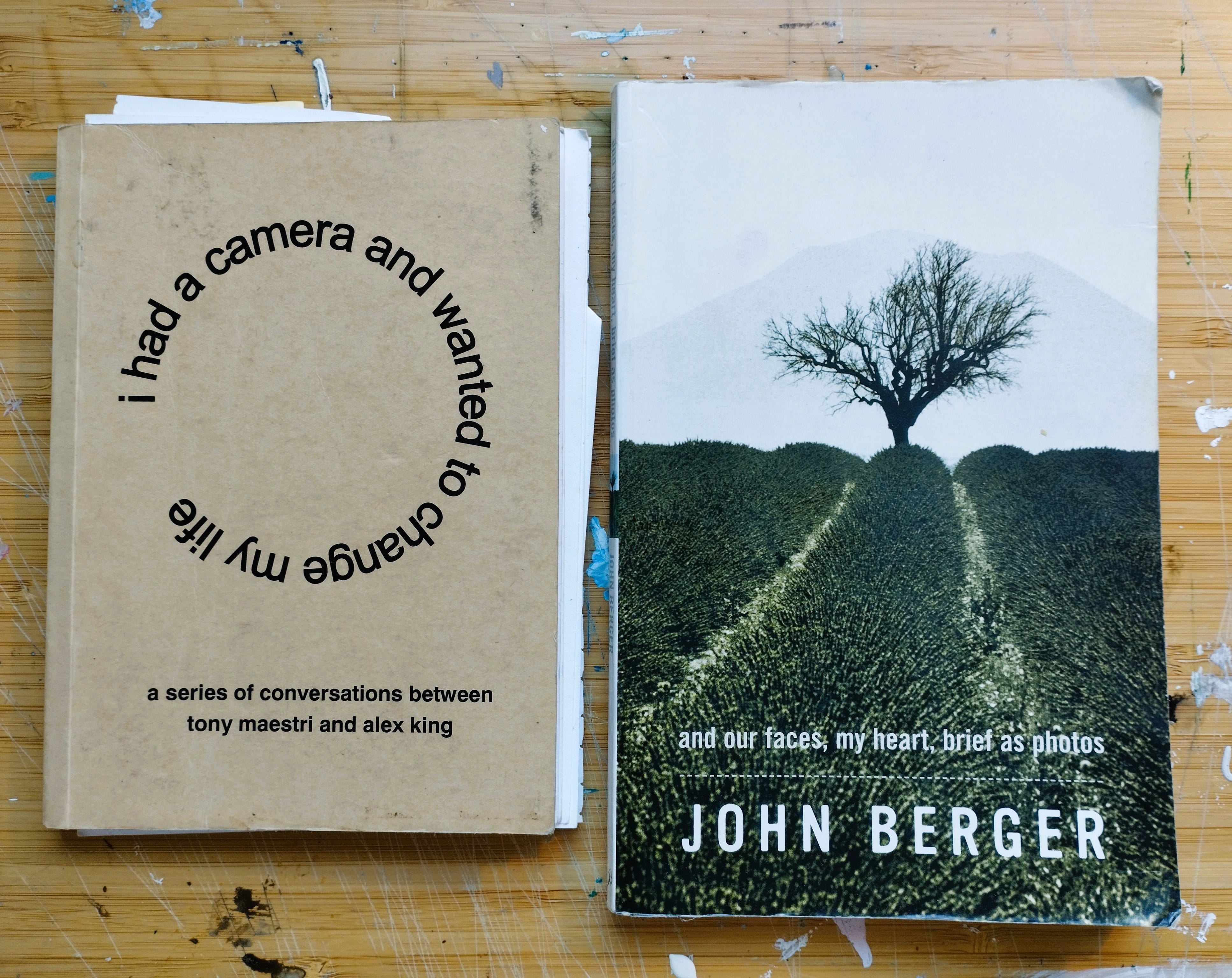
I had two small books with me that are very portable: John Berger’s And Our Faces, My Heart, Brief as Photos and I Had a Camera and Wanted to Change My Life, a series of conversations between Tony Maestri and Alex King. The only link between the two books, I think, is that Maestri and Berger both have romantic sensibilities, and they both feature writing on photography.
I didn’t book my kids into any summer camps. But yesterday I dropped them at a football day camp. Quite a long day for my six-year-old, ten till three p.m. I ignored the sulking and complaining because I needed a good chunk of time on a painting. I worked solidly on it for around three to four hours, through lunch, really just stopping for tea and toast.
What was interesting about this rare stretch of time is that around one and a half to two hours in, I was painting without thinking, which sounds strange, but I mean there were fewer pauses, and I could move around the painting and know what needed to be adjusted quite instinctively. Or maybe intuitively is a better word. It was strange to notice this unthinking stage, and the noticing of it broke the spell. All the same, it was good to realise what block of time I ideally needed to enter this unthinking state.
With photography, a good photograph happens for me instinctively or by chance. Maybe sometimes I notice a good composition or interesting light, but I won’t take a picture unless it feels right or I’m interested in the subject.
At the end of a John Hutchinson text I was forwarded recently, he summarises feeling as being at the centre of what he came to believe was good curatorial practice. So, what is happening? Is it sharing a feeling, expelling a feeling, or creating a feeling? Maybe something happens when it is a combination of all three.
And this links to the two books. Tony Maestri was a photographer and teacher at Bournemouth Arts Institute. One of his best-known students was Wolfgang Tillmans. The book offers insights into Maestri’s mindset through a conversation between himself and Alex King, an exchange on the subject of feeling, teaching, sharing, and creativity.
Recently I found myself wondering where my drive for creativity was. Is it an extended spell of restlessness and navel-gazing? The term “emotional rape” that Maestri and King exchange in their conversation is a difficult one to process. But Maestri links it to his teaching, where he was focused on giving, which drained his own creative faculties. Whereas an artist is perhaps more focused on emotionally raping themselves in terms of taking and mining from their past or present experiences. A taking and exploiting of what is to hand.
My 35mm Kodak M35 camera broke this week. I think I had taken ten pictures on the 36-exposure roll of film. It was disappointing. I can remember the moments of many of the photographs, focusing on areas of dappled light and the busy hands of my sons while they built a dirt ramp in the woods.
More take. I don’t know if I can work in any other way.
When my kids pose for family photographs, they tire easily. “No more photos, please.” They are giving and giving.
With me alone, they don’t seem to notice the camera, and there is an aspect here of something more underhand, like stealing, a transaction that Sontag calls the aggressive arm of the photographer. I am uncomfortable with this reality, but I am not denying its presence. And I am selfish in ways, unashamedly taking pictures for my own use.
When the camera broke, it was almost like something in me broke too, and I suddenly felt so tired, tired of chasing images and the energy needed for image-making.
Is the painting process more giving? Maybe in its material sense, its additive properties, the choices, and the texture. Ultimately, perhaps it depends on the painting and the painter, what you represent, and what you withdraw.
I recently read a piece by Lydia Davis on Alan Cote’s paintings, Energy in Colour, from 2014. Cote’s paintings are abstractions of coloured elements against contrasting coloured backgrounds. I would not normally be drawn to work like this, but with Davis’s essay I was able to forget my own biases and see the work with renewed interest. This especially echoed a focus on giving:
“The interaction of the elements and grounds is contrapuntal: the blue comes to the red oranges; the blue gives to the red-oranges and the red-oranges give to the blue at the same time as they set up an opposition to it.”
There is such a generous exchange between Cote’s paintings and Davis’s writing. It made me want to see the paintings in the flesh. She recreates his world and, in turn, makes it expand to include others.
I have been thinking about worlding, worlding in books and zines, exhibitions and rooms. My daughter has been away and I wanted to surprise her by repainting her desk area, with fresh sheets and some new pictures on the walls. Private worlding and caregiving.
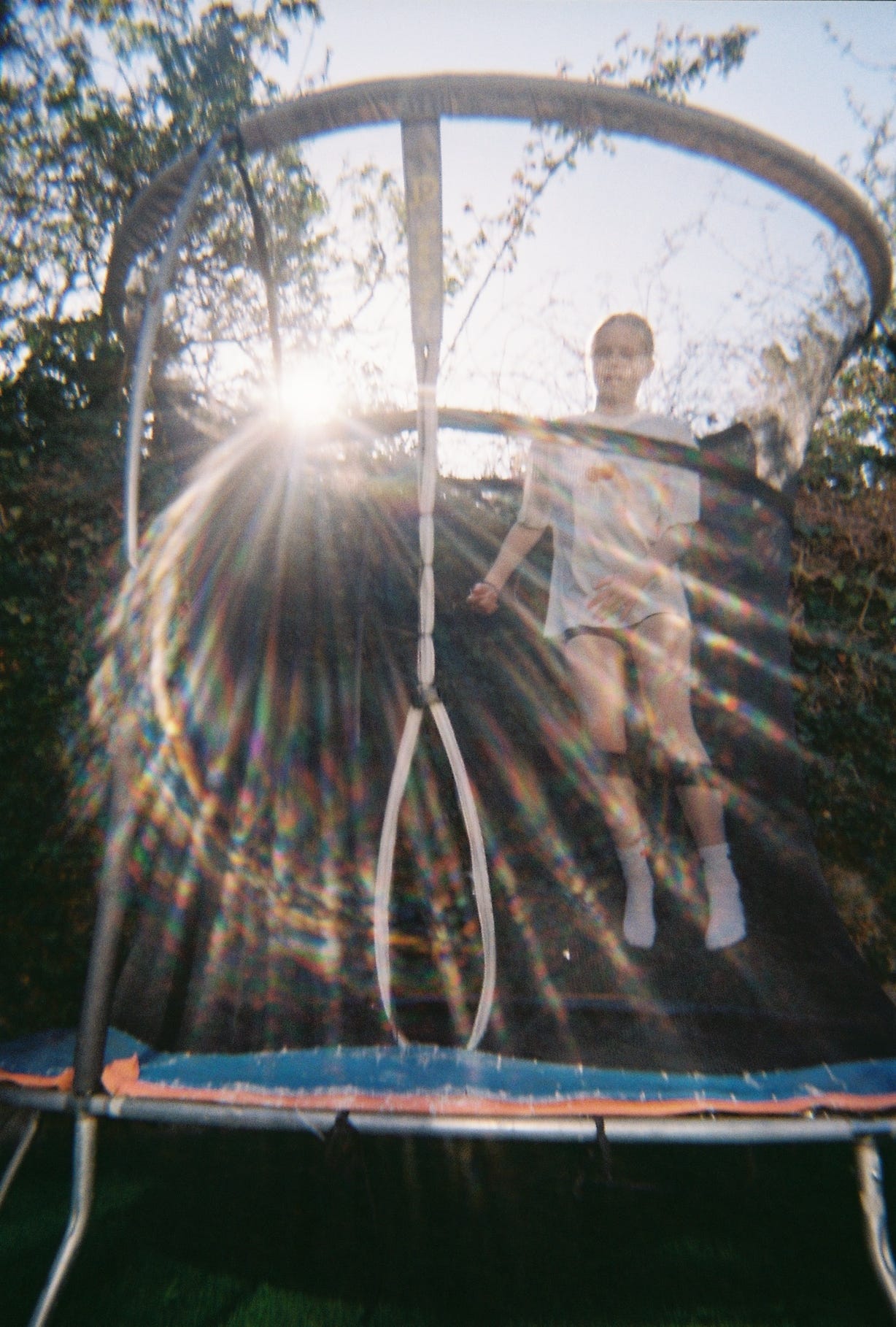
As I write this, I watch a butterfly fly into the inside of our trampoline’s net. It circles around the black circumference, around and around. There is enough space and light in this cylinder for it to become its whole world. But gradually the butterfly rises up out of the metal frame and beats its wings elsewhere.


Leave a Reply