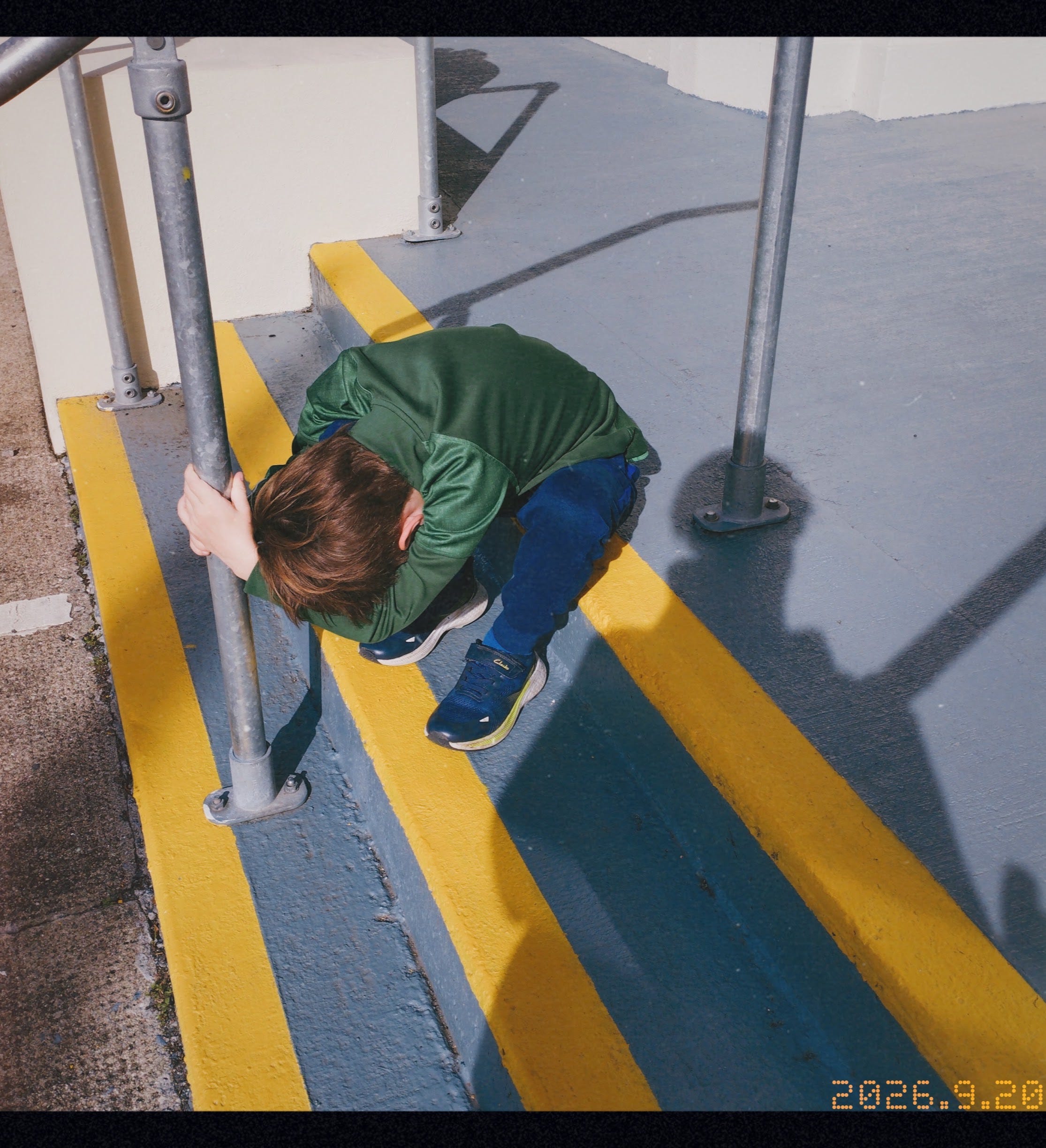
“You’re a forward,” the coach says to my son. He stands there, arms folded, expressionless. I know what he’s thinking. I don’t understand all the rules of the game, but I know what it is to go forward. He must keep moving, even with boys diving at him or hanging off him. If he falls, he is to turn on his side while the other boys tumble onto him, clutching at the ball. He should hold onto it until he can push it to a teammate.
I stand a few feet away from a man taking pictures for the other team. His lens is about a foot long. He is focused, looking for moments which will captivate with this sporting force, pushing forward. When he takes a picture, his camera doesn’t make a sound. I see the silent pulse of his finger on the button, up and down.
Recently, I learned that in Japan it is now enforced by law that all camera phones and similar digital devices have a click sound when you take a photograph. This is to prevent people taking pictures of children in public without permission and upskirting on public transport. This is where a photograph is taken up a woman’s skirt, also without permission.
I have a new camera app on my phone which has this satisfying click sound when you take a photo. The photos on the app are designed to emulate old photographs. Essentially, the app creates a simulacrum of analogue photography. At first I was reluctant. Isn’t it cheating? Yes, but it’s an experiment. It’s interesting. You get to learn about each camera you select through a text and visual breakdown of the look they can achieve, if you have the real device and technical know-how.
The app is about gaining a basic insight and a surface appearance. It’s a point-and-shoot affair. I do feel like I’m learning about different cameras, but at a distance. I am not holding them in my hands, loading the film, playing with the aperture or focus. If I think about this too much, I get a pang of nostalgia or melancholy. I’m missing my film camera, partly because I don’t know what’s on the roll. The excitement and anticipation of processing the film. With this app it’s all already there, stored on my phone to view and be printed as I desire.
Serious analogue photographers must hate this sort of thing, but I find, despite my reservations, I am also fascinated by something which appears to go forwards and backwards at the same time. It has the convenience of a modern app on your phone, but with the intention of creating something of the past. This is not a phone filter stored in your usual camera editing software, but is something separate, where your photos are stored in the app itself. You can then download them onto your camera roll. I presume, though, it is still some sort of filtering software.
I watch Finn. He looks like he’s levitating, being lifted off the ground, moving backwards and forwards in a swarm of boys hungry for the ball. The man’s finger twitches up and down, a silent click, click, clicking.
The good thing about this app is that I spend less time worrying about lighting conditions and more time thinking about the moment and composition. The margin of error exists mainly in my aptitude for taking a good photo and less in my ability to use the camera correctly. Also, a roll of 36 shots of 35 millimetre film is approximately 20/25 euros. To get it processed is around 20 euros. Generally, I find I get between five and ten good photographs from a roll of 35 millimetre film.
When we get home, Finn puts on his protective gear, grabs his skateboard and starts practising ollies. The same repetitive movement again and again, a sort of drag and a thwack sound. I sense him moving away from team sports. He doesn’t have this sort of drive.
I bend down and take pictures of his feet, still and then in motion, a click, one after the other, and then a churning sound, like the film is being rolled.
Sounds are important, sensory reminders of the real thing, the past within the present.
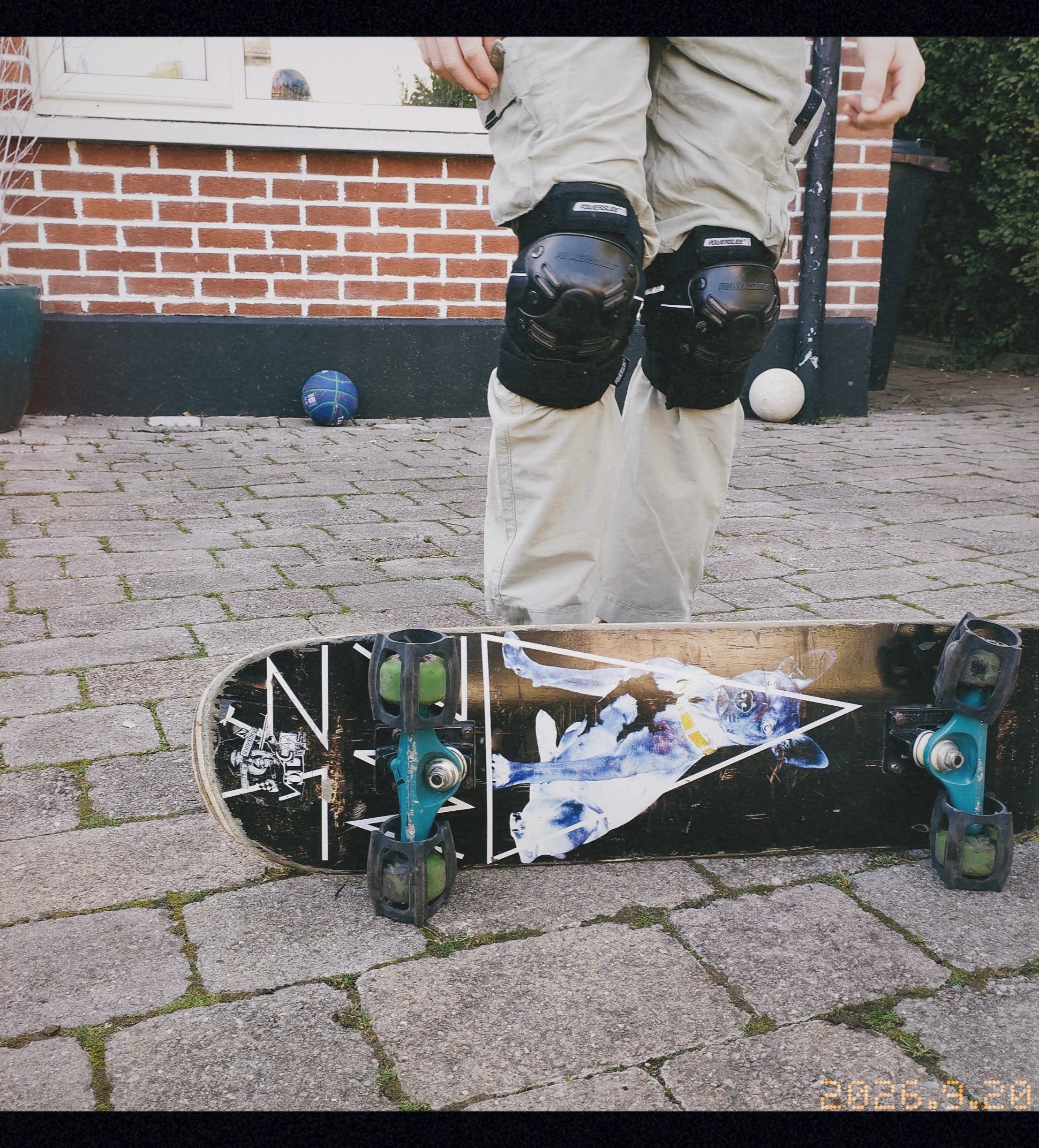
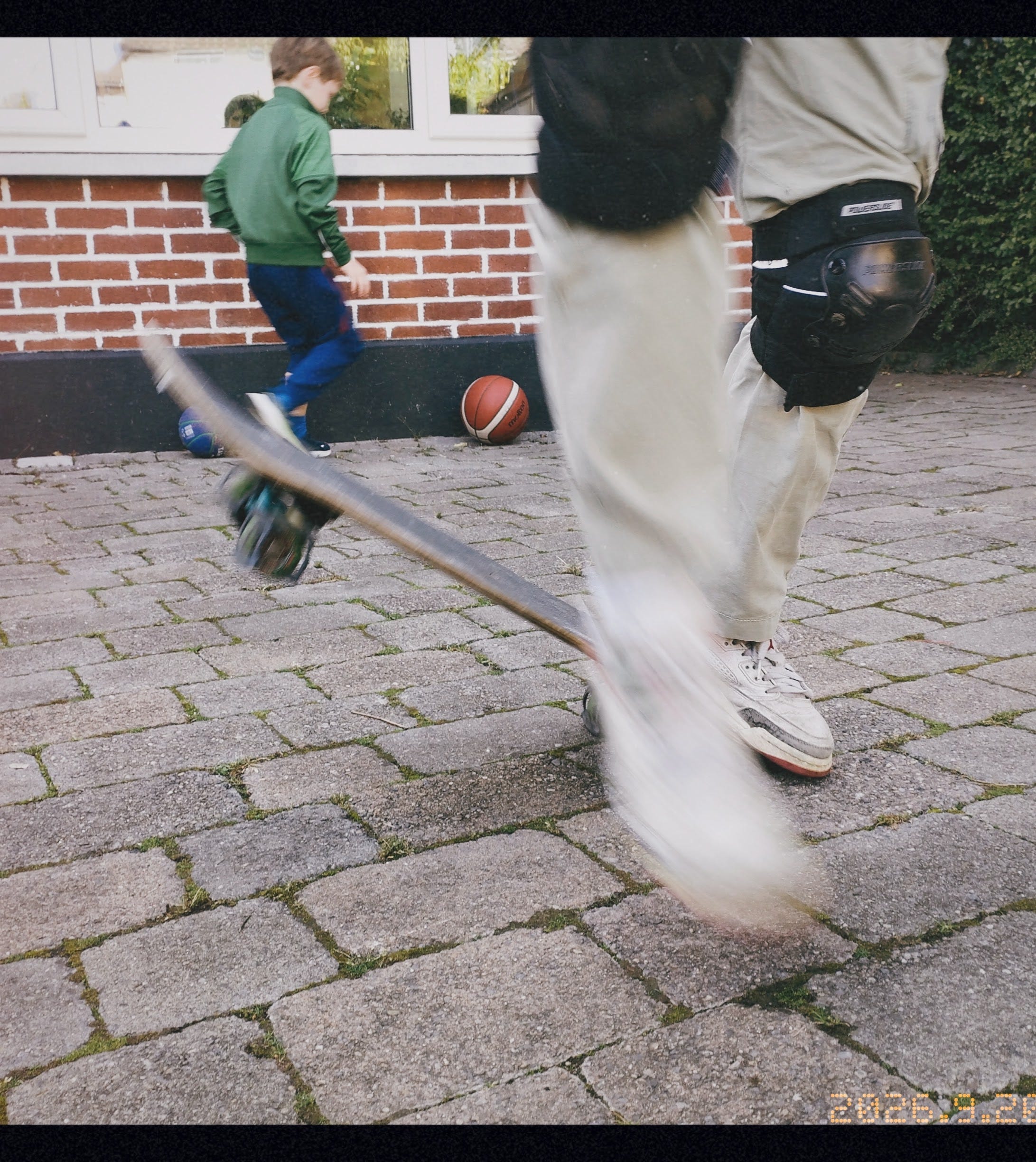
NB: These photographs were taken using a simulation of the Rollei 2.5 twin-lens reflex camera.


Leave a comment