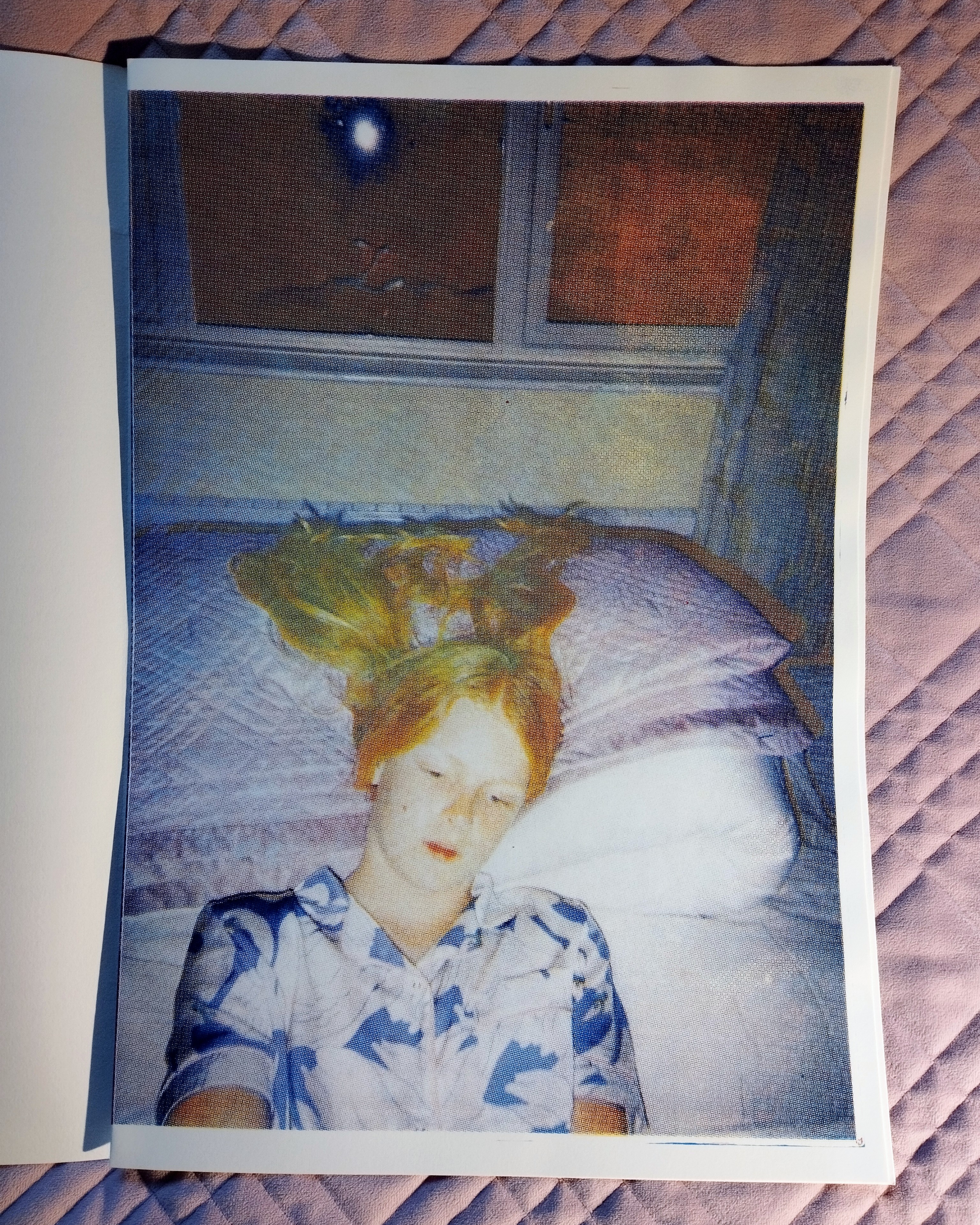
For the record. I spoke about the photograph shown at the bottom of this article, and its use in a limited print edition zine publication, recently to a class of photography students. The reception was mixed. A couple of exchanged glances and raised eyebrows: “Why use this photograph of someone so close to you, someone so dear?” “Everyone has an agenda,” the lady at the front said. I sat there and didn’t say much. I don’t feel the need to defend the photograph or my use of it. However, there are a few things worth following up on, in response to the conversation already published as a podcast on Substack.
On the day of the photograph, I was busy as usual with domestic life. My daughter had already started to move into the periphery of our days. Approaching adolescence, you are no longer the centre of your child’s world as a parent. Friendships take over, and you move out of their focus, becoming something more distant. I was aware of this happening and, although it is a healthy and natural progression, so I am told, it doesn’t change the strangeness of how it feels. Moments, such as this one, become rarer and rarer.
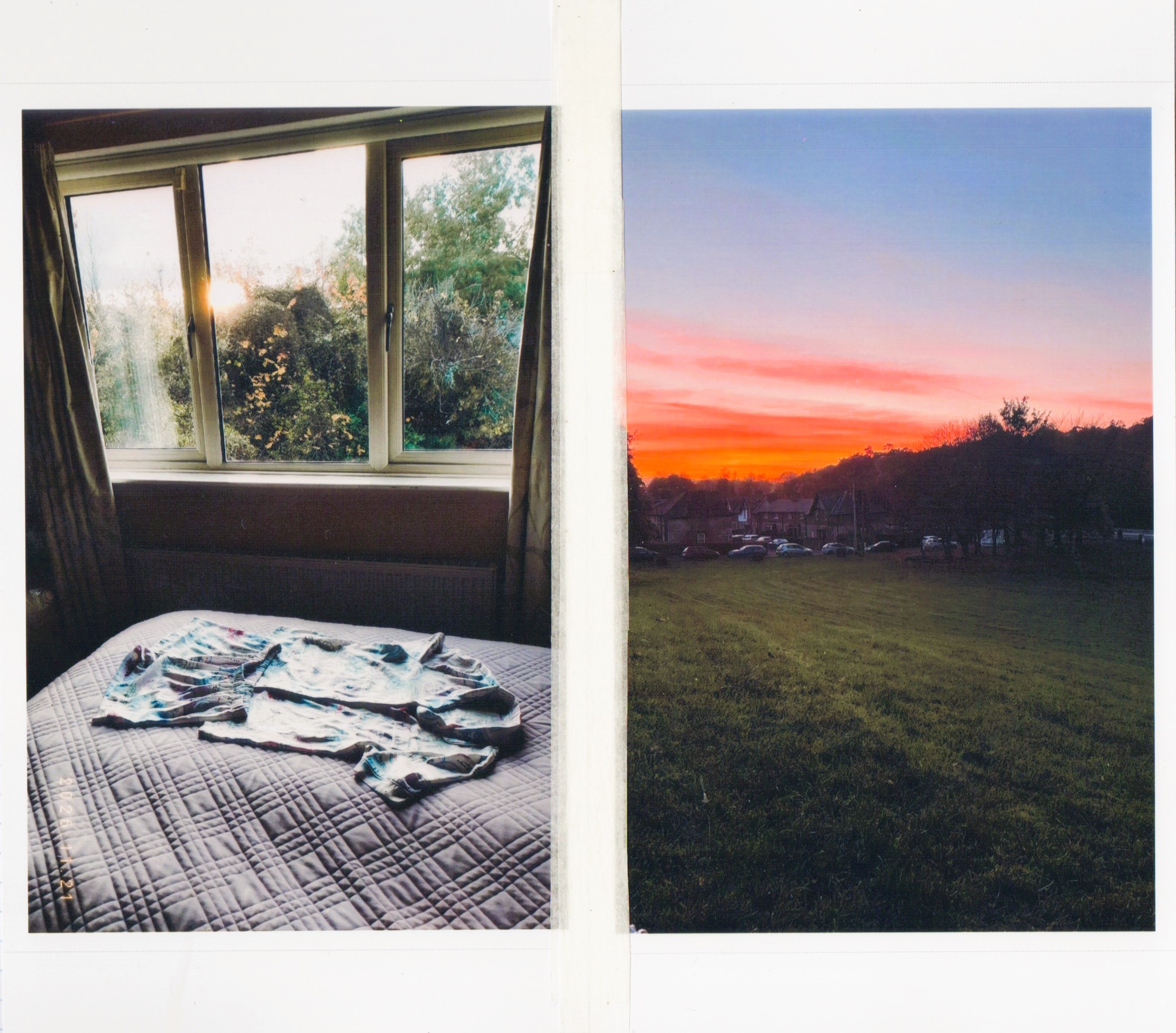
My daughter lay on my bed to chat to me. I looked at her while sorting folded laundry and sheets that needed to be stretched over the mattresses. “Wait,” I said. “Stay there. I want to take a picture. Your hair looks interesting like that across the duvet.” She said, “OK, but I haven’t washed it.” I took the picture.
It wasn’t until the film was developed and returned that I realised the image was charged with something else for me, something from the past that had dropped into the present.
I think my relationship with my daughter changed in particular ways over the years. When we moved country, she was two and my son was a newborn. We found ourselves in a new place where, as her mother, I had no connections of my own, and our dynamic shifted. She became more like a companion than someone in my care. Perhaps she needed something different. Maybe it wasn’t healthy for her to become so much like her mother’s companion when she was only two.
But the reality was that I didn’t know anyone in the new city. Her father left early in the morning and returned late in the evening. This was before COVID, so he was gone every weekday. We spent our time exploring new places, with her little brother in tow, who, it has to be said, was a difficult baby and cried a lot.
I struggled at times. Perhaps she could read something of this in my emotional state, in the shifts in my moods. However much I tried to hide it from her, children are so perceptive.
I was the centre of her world then, and she and her little brother were the centre of mine, in a way that perhaps differed from the experience of mothers who had more adult company in their everyday lives. As the years passed, I began to question whether this time had been good for her. Whether she had taken on too much responsibility in ways beyond her years. I suspect she did, and I carry some guilt about that.
Now, as I watch her become an adolescent, an independently minded, sociable, fun-loving teenager, I find myself reflecting on those times and feeling hopeful.
What does this say of the photograph when it is met through a stranger’s eyes?
“You don’t have to take photographs about motherhood like this,” the agenda woman said. “I’ve taken lots of photographs of laundry piles and toilets in my house, to remark on motherhood.”
“Okay,” I said.
But surely there is a distinction. A photograph of domestic things might speak of your day to day reality, but there is absence, while a photograph of a person speaks of presence. And what about this particular presence? The mother in the presence of the child. She is surely a different person, a different version of herself. The child in the presence of the mother is always a child.
I could talk about the relationship between my own mother and me, but what of it? Maybe Diane Arbus was right: “A photograph is a secret about a secret.”
What I see when I look at this picture objectively, through a stranger’s eyes, without knowing its backstory, is a picture of a young girl.
And what is the experience of that young girl now? What is the experience of our daughters, our collective daughters? This is what I wonder when I look at the photograph. They are moving through a world of constant imagery. My daughter herself is creating a photographic collection of scenes at dusk. She is trying to capture the perfect sunset.
We live in an image-saturated culture, where photographs perhaps mean less than they ever have before. The time we give to an image seems to be shrinking, from three seconds to one. But this image holds meaning for me, and I think it holds meaning for her, too. Perhaps it is important that we share that meaning, that we make it visible. What we hold dear. There is truth in something that holds meaning, and there is beauty in that truth.
The act of making and the act of looking are neither of them neutral. We both set the agenda. The viewer is complicit, whether they accept and embrace the image or reject and refuse it.
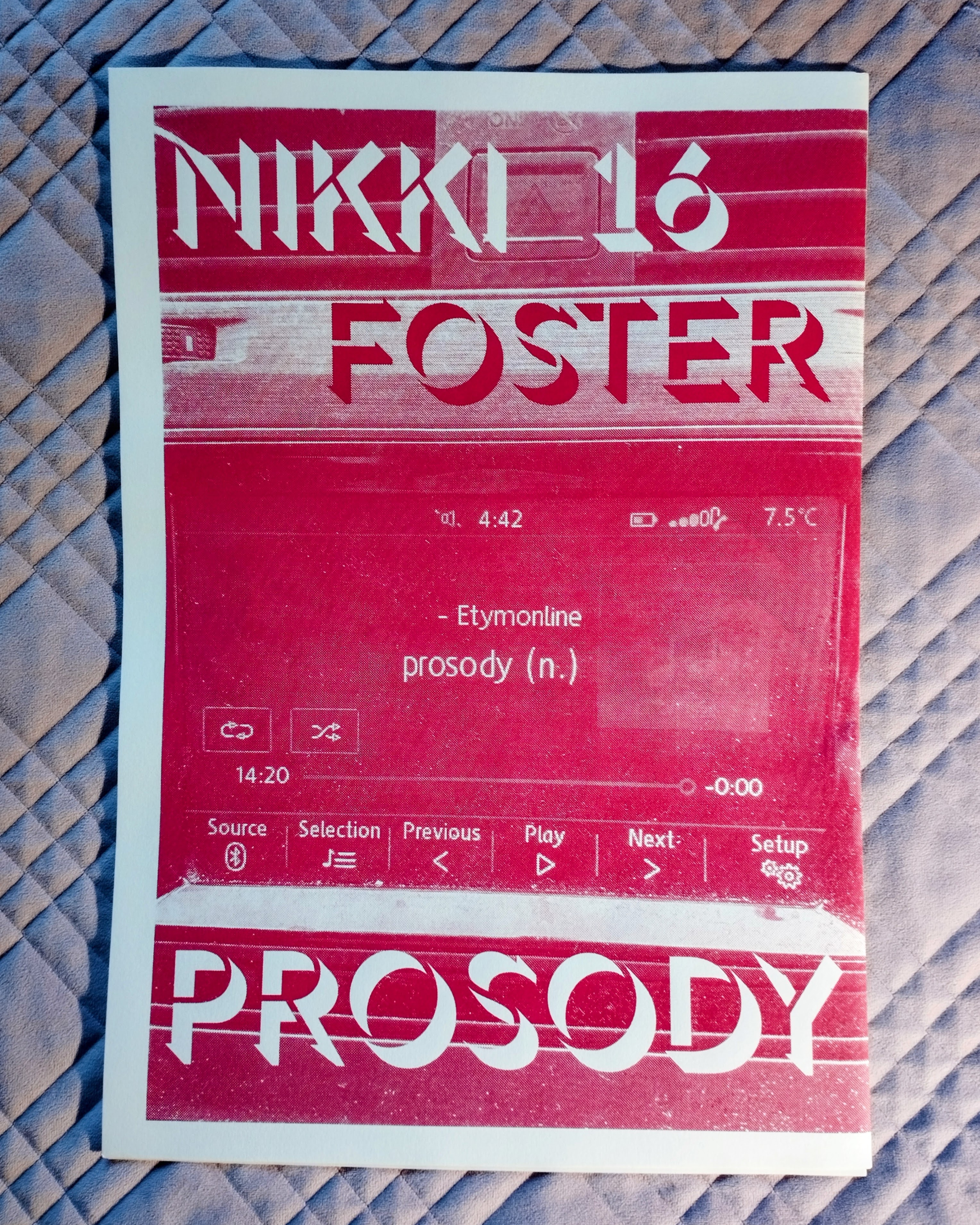
I am proud that this photograph was chosen to be included in Small Night Project’s Prosody series, as a recorded conversation and subsequent zine. The image is something which sits inside the zine form perfectly. A zine is intimate. It can be held and considered in a slow, careful way.
The Prosody zine series will be available at Dublin Art Book Fair this December.


Leave a Reply